


Short answer: The heat exchanger is the metal chamber that keeps the burner flames and exhaust gases separate from the air you breathe. A crack can let combustion gases, including carbon monoxide, mix with that air. In Ontario, a gas technician who finds a hazardous condition will tag the furnace, and the gas may be shut off on the spot. A cracked heat exchanger usually means replacing the furnace, unless the part is covered by warranty and the rest of the furnace is in good shape.
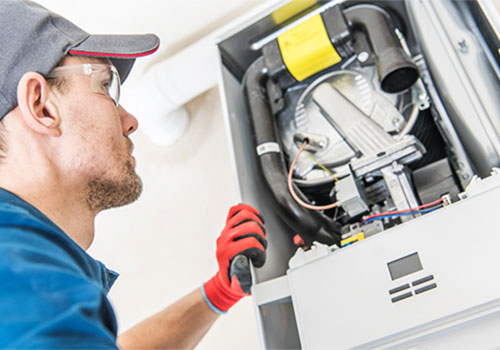
What the heat exchanger does
Inside a gas furnace, the burners heat a sealed metal chamber called the heat exchanger. Exhaust gases stay inside it and leave through the vent pipe. House air is blown over the outside of it and comes out of your vents warm. Years of heating and cooling make the metal expand and contract, and over time that can crack it. Overheating from a clogged filter or poor airflow speeds this up.
Signs a heat exchanger may be cracked
None of these prove a crack on its own. Each is a reason for a technician to inspect it:
- A carbon monoxide alarm going off.
- Headaches, tiredness or nausea that ease when you leave the house.
- Soot around the burners or the cabinet.
- A yellow, lazy or wavering flame, especially one that moves when the blower starts.
- Rust or corrosion on the heat exchanger or vent.
- A smell of exhaust from the vents.
If anyone feels unwell or an alarm sounds, get everyone outside and call 911 from outside. Do not investigate first. Our furnace carbon monoxide guide explains the symptoms and Ontario’s alarm rules.
How a technician confirms it
A TSSA certified technician uses several checks:
- Inspects the heat exchanger visually, often with a camera.
- Watches the flame as the blower starts.
- Measures carbon monoxide in the flue gas with a combustion analyser.
- Tests for spillage at the vent.
Ask to see the photo or the reading. You are entitled to know what was found.
Red tags in Ontario
Ontario’s gas safety rules let technicians tag an appliance that is unsafe. Enercare describes the two common types as follows:
| Tag | When it is used | What happens |
|---|---|---|
| Type A (immediate hazard) | An immediate danger, such as a severe carbon monoxide leak | The gas is shut off right away |
| Type B (non-immediate) | A problem that is not an immediate danger | The utility is notified and you get a set time to repair or replace; if the deadline passes, the gas can be turned off |
Do not turn the gas back on or remove a tag yourself. You may ask another licensed contractor for a second opinion before you replace the furnace.
Repair or replace?
Heat exchanger cracks are hard to repair safely. In most cases the choice is between:
- Replacing the heat exchanger under warranty. This makes sense on a younger furnace where the part is covered and the rest of the system is sound. Labour is usually extra unless your installer’s labour warranty covers it.
- Replacing the furnace. This is the usual answer on an older furnace, or when the part is not covered.
On Carrier furnaces, the heat exchanger warranty is lifetime if the furnace was registered within 90 days of installation, and 20 years if it was not. Our furnace warranty guide explains how to check.
If replacement is the answer, our new furnace cost guide shows 2026 Mississauga prices. The furnaces page covers buying, financing and renting.
How to lower the risk
- Change the filter regularly so the heat exchanger does not overheat.
- Book a yearly inspection that includes a combustion test.
- Keep a working carbon monoxide alarm on every storey.
Talk to us
If your furnace has been tagged, or you want a heat exchanger inspection, book furnace repair in Mississauga. We serve Mississauga, Brampton, Etobicoke, Milton, Georgetown, Caledon and Bolton. Call 905-564-8545.
Frequently asked questions
What happens if a furnace heat exchanger is cracked?
A crack can let combustion gases, including carbon monoxide, mix with the air blown through your home. In Ontario a technician will tag the furnace, and the gas may be shut off until it is repaired or replaced.
Can you run a furnace with a cracked heat exchanger?
No. Do not run it, and do not turn the gas back on if it has been shut off or tagged. Have it inspected and repaired or replaced by a licensed contractor.
What are the signs of a cracked heat exchanger?
A carbon monoxide alarm, symptoms that ease when you leave home, soot, a yellow or wavering flame, rust on the heat exchanger, or an exhaust smell. A technician has to confirm the crack.
Is a cracked heat exchanger covered by warranty?
Often, yes. On Carrier furnaces the heat exchanger is covered for life if the furnace was registered within 90 days of installation, or 20 years if not. Labour may not be included.
What is the difference between a Type A and Type B red tag?
Type A is for an immediate danger and the gas is shut off right away. Type B is for a problem that is not immediately dangerous; you get a set time to fix it before the gas is turned off.
Sources and references
- Enercare, What should you do when your gas appliance is red-tagged?, Type A and Type B tags, read October 26, 2026.
- TSSA, Be in the Know about CO: Take Action. Think Safe..
- Health Canada, Carbon monoxide: Symptoms of exposure.
- Carrier Canada, Warranty and registration, as summarized in our furnace warranty guide (verified August 27, 2026).