




AC Energy Saving Tips for Ontario Homes

Eco-Friendly AC Tips that actually cut a Peel Region hydro bill start with the clock, not just the thermostat. Most AC energy saving tips published online are written for a flat electricity rate. Ontario does not have one. Under the province's default Time-of-Use plan the same kilowatt hour costs three different prices depending on the clock, and in summer the most expensive block sits directly on top of the hours your air conditioner works hardest. This guide gives the exact hours, the exact rates, and the order in which the fixes actually pay. If your system is due for service first, start with air conditioner service in Mississauga.
The short answer: the fastest way to cut air conditioning costs in Ontario is to move cooling out of the on-peak window. In summer, weekday electricity costs 20.3 cents per kWh between 11 a.m. and 5 p.m. against 9.8 cents off-peak, so pre-cooling before 11 a.m. and letting the setpoint drift afterward buys the same comfort at roughly half the rate.
Aire One Peel is a Carrier Factory Authorized Dealer serving Mississauga, Brampton, Caledon, Bolton, Milton, Georgetown and Etobicoke, with free in-home estimates and AC maintenance in Mississauga that restores the capacity this strategy depends on.
Key takeaways
- Summer on-peak is weekdays 11 a.m. to 5 p.m. at 20.3 cents per kWh. Off-peak is 9.8 cents. That is the whole strategy in one line.
- The summer and winter schedules swap every May 1 and November 1. This is standing OEB policy, not a new rule.
- Rates rose about 29 per cent on November 1, 2025 across all three Time-of-Use bands. That is what actually changed.
- The Tiered summer threshold is 600 kWh a month, down from 1,000 kWh in winter, so heavy coolers reach the higher rate sooner.
- Ultra-Low Overnight is cheaper than Time-of-Use during midday cooling and far more expensive from 4 p.m. to 9 p.m. It is a trade, not a trap.
Call 905-564-8545 Book a free in-home estimate
What this guide covers
- What Ontario cooling actually costs per hour
- Why the peak window moves every May and November
- How to pre-cool a Peel home, hour by hour
- Which AC energy saving tips actually move the needle
- Choosing the right rate plan if you run central air
- Rate plan finder
- Who to contact to switch plans, by city
- How we know this
- Frequently asked questions
What Ontario Cooling Actually Costs Per Hour
Cooling costs 20.3 cents per kWh on a summer weekday afternoon and 9.8 cents overnight or on a weekend, so identical cooling costs roughly twice as much depending only on when the compressor runs. Ontario households on the default Time-of-Use plan pay three different prices for the same kilowatt hour. These prices were set on November 1, 2025 and hold through October 31, 2026.
| Price band | Rate per kWh | Summer hours (May 1 to Oct 31) | Cost vs off-peak |
|---|---|---|---|
| Off-peak | 9.8 cents | Weekdays 7 p.m. to 7 a.m., all day weekends and holidays | Baseline |
| Mid-peak | 15.7 cents | Weekdays 7 a.m. to 11 a.m. and 5 p.m. to 7 p.m. | 60 per cent more |
| On-peak | 20.3 cents | Weekdays 11 a.m. to 5 p.m. | 107 per cent more |
What genuinely changed this year is the price level, not the schedule. The November 1, 2025 adjustment took the three bands from 7.6, 12.2 and 15.8 cents to 9.8, 15.7 and 20.3 cents, an increase of roughly 29 per cent across the board. There is a partial offset: the Ontario Electricity Rebate moved to 23.5 per cent on the same date and is applied automatically to eligible residential bills. It softens the total but does not change the ratio between bands, so the timing advice holds either way.
Why the Peak Window Moves Every May and November
Ontario runs two Time-of-Use schedules and swaps between them on May 1 and November 1 each year, which is standing Ontario Energy Board policy rather than a new rule. In winter, peak pricing sits in the morning and early evening, when people are heating, cooking and getting ready. In summer it moves to the middle of the day, when air conditioning drives demand. The prices themselves do not change at the swap. Only the hours do.
| Price band | Winter hours (Nov 1 to Apr 30) | Summer hours (May 1 to Oct 31) | Rate per kWh |
|---|---|---|---|
| Off-peak | Weekdays 7 p.m. to 7 a.m. | Weekdays 7 p.m. to 7 a.m. | 9.8 cents |
| Mid-peak | Weekdays 11 a.m. to 5 p.m. | Weekdays 7 a.m. to 11 a.m. and 5 p.m. to 7 p.m. | 15.7 cents |
| On-peak | Weekdays 7 a.m. to 11 a.m. and 5 p.m. to 7 p.m. | Weekdays 11 a.m. to 5 p.m. | 20.3 cents |
The practical consequence is that a heating habit and a cooling habit are opposites. In January you want the house warm before 7 a.m. In July you want it cool before 11 a.m. Weekends and statutory holidays are off-peak all day in both seasons, which is why weekend cooling barely rewards any timing effort at all.
How to Pre-Cool a Peel Home, Hour by Hour
Pre-cooling means running the air conditioner harder while power is cheap, then easing off once it gets expensive, using the building itself as a thermal battery. A reasonably sealed Peel home holds cool air for several hours, so the drift during the expensive block is gradual enough that most people do not notice it.
| Time block | Price band | Rate per kWh | What to do |
|---|---|---|---|
| Overnight to 7 a.m. | Off-peak | 9.8 cents | Cheapest cooling of the day |
| 7 a.m. to 11 a.m. | Mid-peak | 15.7 cents | Pre-cool to the low end of your range; close blinds on sun-facing sides |
| 11 a.m. to 5 p.m. | On-peak | 20.3 cents | Let the setpoint drift up 2 to 3 degrees Celsius; run fans in occupied rooms |
| 5 p.m. to 7 p.m. | Mid-peak | 15.7 cents | Return to your normal setpoint |
| 7 p.m. onward | Off-peak | 9.8 cents | Run laundry, dishwasher and oven now |
This works when three things are true: the home is reasonably sealed, window coverings are closed on sun-facing sides before the heat arrives, and the thermostat can run a schedule rather than a single fixed temperature. A basic programmable thermostat handles it. Our guide on how smart thermostats improve system performance covers the scheduling side in more depth.
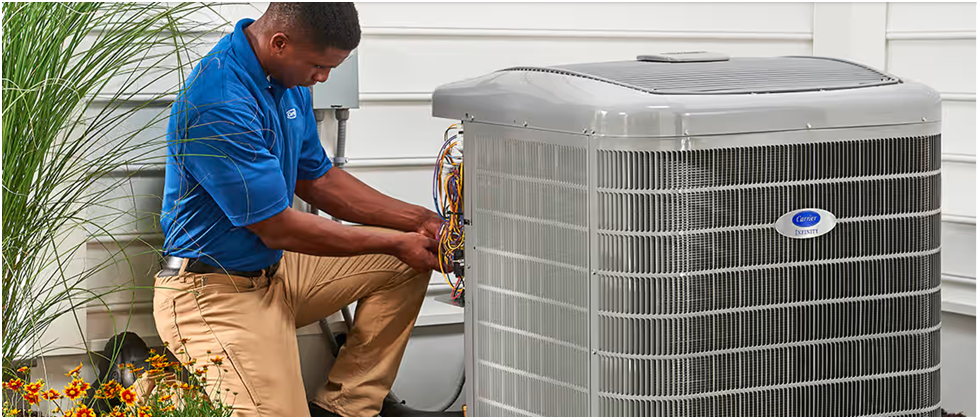
One honest caution. Pre-cooling shifts consumption; it does not reduce it much. If your system is undersized, dirty, or low on refrigerant, it will not pull the house down quickly enough before 11 a.m. and you will run through the expensive block anyway. Timing strategy rewards a healthy system and punishes a neglected one, which is the real reason maintenance sits so high on the list below.
Which Eco-Friendly AC Tips Actually Move the Needle
Not every habit is worth the effort, so here are the Eco-Friendly AC Tips ranked by real dollar impact. Shifting cooling out of the on-peak window is the single highest-value change available to most Ontario homes, followed by annual service and then shading. Summer cooling advice usually arrives as an undifferentiated list, and in Ontario conditions the items are nowhere near equal.
| Action | Effort | Why it matters in Ontario |
|---|---|---|
| Shift cooling out of 11 a.m. to 5 p.m. | Low, one schedule | Same cooling at 9.8 cents instead of 20.3 cents |
| Annual service: clean coils, correct charge | Low, once a year | Restores the capacity pre-cooling depends on |
| Close blinds on sun-facing windows before 11 a.m. | Low, daily habit | Blocks heat before it enters, ahead of peak pricing |
| Replace filters every 1 to 3 months | Low, ongoing | Restricted airflow lengthens run times |
| Ceiling fans in occupied rooms only | Low | Lets you sit 2 to 3 degrees Celsius warmer at the same comfort |
| Move laundry, dishwasher and oven past 7 p.m. | Low, habit | Cuts internal heat gain and moves the load to off-peak |
| Seal duct leaks and air gaps | Medium, one project | Improves how long the home holds pre-cooled air |
| Replace a unit over 12 to 15 years old | High, capital cost | Real gains, but the slowest payback on this list |
Note that fans cool people, not rooms. Running one in an empty room adds a small amount of motor heat rather than removing any, so turn them off when you leave. For the full pre-season sequence, see our summer AC readiness guide.
The maintenance line deserves emphasis because it underpins the rest. A system running on a restricted filter or a low charge loses capacity exactly when the outdoor temperature is highest. An AC maintenance visit covers coil cleaning, charge verification and the electrical checks that keep run times short, and protection plans bundle it annually. If something already sounds or feels wrong, our guide to AC repair cost in Mississauga explains what drives the price of fixing it.
Company introduction from Aire One Peel Heating and Cooling, serving Peel Region and the west GTA.
Possible downside, stated plainly. A tune-up on a system that is already clean and correctly charged will not produce a visible drop in your bill, and we will tell you that on site rather than sell you a plan you do not need. If your unit is past 15 years and failing regularly, the honest answer is usually replacement rather than another service call, and the free in-home estimate is where that conversation belongs.
Want your system ready for the peak window?
A tune-up restores the capacity that pre-cooling depends on: clean coils, verified refrigerant charge, and airflow checked against spec. We will also tell you honestly if your system is too far gone to benefit. Serving Mississauga, Brampton, Caledon, Bolton, Milton, Georgetown and Etobicoke, with financing and rent-to-own available.
Aire One Peel Heating & Cooling
1625 Courtneypark Dr E, Mississauga, ON L5T 1V9
905-564-8545 | [email protected]
Choosing the Right Rate Plan if You Run Central Air
Time-of-Use wins if you can reliably pre-cool and coast through the midday block, Tiered wins if you cannot shift your cooling at all, and Ultra-Low Overnight is a specialist plan that punishes early-evening use. Ontario offers all three to residential customers, and you can switch by contacting your local distributor.
| Plan | Key rates per kWh | Best for | Skip if |
|---|---|---|---|
| Time-of-Use | 9.8 off-peak, 15.7 mid-peak, 20.3 on-peak | Homes that can pre-cool before 11 a.m. and drift through the afternoon | Someone is home all day and needs a fixed setpoint |
| Tiered | 12.0 to the threshold, 14.2 above it | Households that cannot shift cooling and want one predictable price | You already run most load overnight and on weekends |
| Ultra-Low Overnight | 3.9 overnight, 15.7 weekday 7 a.m. to 4 p.m., 39.1 weekday 4 p.m. to 9 p.m. | Overnight EV charging or home battery storage | Your house needs heavy cooling between 4 p.m. and 9 p.m. |
Ultra-Low Overnight deserves a more careful reading than it usually gets. Its overnight rate of 3.9 cents per kWh is among the cheapest in Canada, and during the midday cooling block it charges mid-peak at 15.7 cents, which is actually less than the 20.3 cents a Time-of-Use household pays at the same hour. The catch arrives at 4 p.m., when Ultra-Low Overnight switches to 39.1 cents until 9 p.m. On a hot Peel evening with the house still shedding heat, five hours at nearly four times the off-peak rate erases the overnight advantage quickly. It suits EV owners and battery households. It rarely suits a family that cools hard after work.
Whichever plan you are on, decide from your own data rather than the headline rate. Pull last summer's bills, look at how much of your usage landed in each band, and model the alternative before switching. If your system is near the end of its life, current incentives are on our offers and rebates page.
Rate Plan Finder
This three-question finder points you at the plan most likely to suit your cooling pattern, and every answer it gives is already in the tables above. Treat it as a starting hypothesis to check against your own bills, not a recommendation to switch on the spot.
Which Ontario rate plan fits your cooling?
Who to Contact to Switch Plans, by City
Ontario's electricity prices are set province-wide by the Ontario Energy Board, but the utility you contact to change plans depends on which city you live in, and it is not Alectra everywhere in our service area. Homeowners in Caledon, Bolton, Milton and Georgetown regularly assume it is, then lose a week calling the wrong company.
| City | Electricity distributor | Note |
|---|---|---|
| Mississauga | Alectra Utilities | Former Enersource territory |
| Brampton | Alectra Utilities | Former Hydro One Brampton territory |
| Caledon and Bolton | Hydro One | Not Alectra, despite being in Peel Region |
| Milton | Milton Hydro | Independent municipal distributor |
| Georgetown | Halton Hills Hydro | Independent municipal distributor |
| Etobicoke | Toronto Hydro | Toronto territory, not Peel |
The sizing and timing advice in this guide applies identically across all seven cities because the rates are provincial. What varies locally is housing stock: older Brampton and Bolton homes with weaker envelopes hold pre-cooled air for less time than newer Mississauga builds, which shortens the coast through the on-peak block. A free in-home estimate is where that gets assessed properly.
How We Know This
Every electricity rate, hour block and threshold in this guide was verified against the Ontario Energy Board's published Regulated Price Plan on July 29, 2026, with the year-over-year comparison drawn from the OEB's historical rates table. No rate figure here is second-hand from another article.
The operational advice comes from Aire One Peel's own service work across Mississauga, Brampton, Caledon, Bolton, Milton, Georgetown and Etobicoke.
Compiled by Mario Vaghei, General Manager, from the Ontario Energy Board's published rates and Aire One Peel's own service records, in July 2026.
Choose Your Approach
Choose pre-cooling if your home is empty during the day or your household tolerates a 2 to 3 degree Celsius drift. It is free, reversible, and the single largest lever available. Start with the hour-by-hour schedule above.
Choose Tiered pricing if someone is home all day, a medical need requires a fixed temperature, or shift work makes scheduling impractical. Predictability is worth more than optimization here.
Choose a maintenance visit first if your system struggles on hot afternoons or has not been serviced in two or more seasons. Timing strategy cannot rescue a system that has lost capacity. Book AC service in Mississauga.
Choose replacement if the unit is past 15 years and repairs are recurring. Ask about financing and rent-to-own on the free in-home estimate rather than assuming the upfront cost is the whole picture.
Frequently Asked Questions
What are the best AC energy saving tips for Ontario homes?
Shift cooling out of the on-peak window first, since summer on-peak electricity costs 20.3 cents per kWh between 11 a.m. and 5 p.m. against 9.8 cents off-peak. Then keep the system serviced so it has the capacity to pre-cool quickly, close blinds on sun-facing windows before 11 a.m., and change filters every one to three months.
What are Ontario's on-peak hours in summer?
Summer on-peak runs weekdays from 11 a.m. to 5 p.m. at 20.3 cents per kWh. Mid-peak covers 7 a.m. to 11 a.m. and 5 p.m. to 7 p.m. at 15.7 cents, and off-peak is 7 p.m. to 7 a.m. plus all day on weekends and holidays at 9.8 cents. The summer schedule runs from May 1 to October 31.
What temperature should I set my AC in summer?
A common range is 24 to 26 degrees Celsius while home, raised while away. Under Ontario's Time-of-Use pricing the schedule matters more than the single number: set the low end of your range before 11 a.m. and allow two to three degrees of drift through the on-peak block, which costs about twice as much per kilowatt hour.
Is it cheaper to run the AC at night in Ontario?
Yes on the Time-of-Use plan. Off-peak runs from 7 p.m. to 7 a.m. on weekdays and all day on weekends and holidays at 9.8 cents per kWh, compared with 20.3 cents during the summer on-peak block. Overnight cooling is roughly half price, which is also why pre-cooling in the cheap hours works.
Does turning the AC off while away save money?
Setting it warmer saves more reliably than switching it off entirely. A house that heats up completely needs a long recovery run to cool down, and in summer that recovery often lands inside the 11 a.m. to 5 p.m. on-peak block at 20.3 cents per kWh. Raising the setpoint by three to four degrees Celsius while out is the usual recommendation.
Do ceiling fans lower cooling costs?
Only in rooms with people in them. A fan moves air across skin, which makes you feel cooler without changing the room temperature, so it lets you sit comfortably two to three degrees Celsius warmer. In an empty room the motor adds a small amount of heat, so it costs rather than saves. Turn fans off when you leave the room.
The Bottom Line
The Eco-Friendly AC Tips that matter most in Peel Region come down to one idea: treat timing as the first lever and maintenance as the thing that makes timing possible. The eco-friendly cooling advice that circulates every summer is not wrong, it is just written for a flat rate that Ontario does not have. Filters, blinds, fans and sealing all help, and they helped last year too.
What separates an Ontario strategy from a generic one is the hour grid: cool hard before 11 a.m., coast until 5 p.m., and run the heavy appliances after 7 p.m. A serviced system that can pull the house down quickly in the cheap window will beat a neglected one running efficiently at the wrong time of day, every month of the summer.
Sources and References
- Ontario Energy Board, electricity rates and Regulated Price Plan, rates effective November 1, 2025 through October 31, 2026
- Ontario Energy Board, historical electricity rates, used for the year-over-year comparison
- Ontario Energy Board, price changes effective November 1, 2025, including the Ontario Electricity Rebate at 23.5 per cent
- Ontario Energy Board, holiday schedule for Time-of-Use and Ultra-Low Overnight
- Alectra Utilities, service territory
- ENERGY STAR Canada, Natural Resources Canada
- Save on Energy, Home Renovation Savings Program
Comparing Local Providers
Other contractors serving the region include Reliance Home Comfort, City Home Comfort and Shipton's Heating and Cooling. Choose Reliance if you want rental equipment with no upfront cost and bundled maintenance, which is a genuinely good fit for landlords and anyone who would rather not own the equipment. When you compare, ask what a tune-up actually includes, whether refrigerant charge is verified by weight, and what the warranty covers. Aire One Peel's case is that we are a local Carrier Factory Authorized Dealer with in-house technicians and free in-home estimates.
Related Reading
- Getting your AC ready for summer in Mississauga
- What AC repair costs in Mississauga
- How smart thermostats improve system performance
What we updated, July 29 2026: corrected the framing of Ontario's seasonal Time-of-Use schedule, which swaps every May 1 and November 1 as standing OEB policy and was previously described as a 2026 rule change. Added exact hour blocks for all three price bands, the Tiered prices, the full Ultra-Low Overnight schedule, a per-city distributor table, and three tables. Removed unverified tenure, award and review-rating claims pending client confirmation.
Electricity rates and program details verified July 29, 2026, subject to Ontario Energy Board revision. All amounts in CAD.