



By Mario Vaghei, General Manager, Aire One Peel Heating & Cooling · Published January 30, 2025 · Facts verified September 2, 2026
Almost every article about cutting a winter heating bill gives you the same seven tips, and most of them are worth a rounding error. The things that genuinely change what you pay are dull: the envelope of the house, the filter, and whether your equipment is doing what it is supposed to. Two of those have Ontario money attached to them right now, which almost nobody mentions. This page separates the three that matter from the ones that do not, and tells you where the money is. If your furnace is actually failing rather than just expensive, start with furnace blowing cold air instead.
On this page
Short answer
To lower a heating bill in Ontario, seal the drafts, add insulation where it is thin, set the thermostat back when you are asleep or out, and change the furnace filter on schedule. Those four do the work. Two Ontario programs will pay a large share of the insulation and sealing, and one of them is free if your household income qualifies.
The myth that costs the most
Leaving the heat at one temperature all day does not save money, and it is the most repeated piece of bad advice in this category. The reasoning behind the myth sounds sensible: people believe a furnace works harder reheating a cold house than it does holding a warm one, so the reheat costs more than was saved. It does not work that way. A house loses heat in proportion to the gap between inside and outside, so a cooler house leaks less while you are asleep or at work, and the fuel you save over those hours is more than the fuel spent bringing it back up.
This site used to give the wrong advice here. The article that previously sat at this address told readers to “keep it set to a consistent, comfortable temperature” and to avoid moving the thermostat. That was wrong, it is corrected on this page, and the correction is the single biggest reason this page exists.
Why there is no percentage on this page
Nearly every competing article puts a number on setback savings, usually “up to 10 per cent”. Follow the citation and it lands on an energy retailer, not a primary source. Natural Resources Canada published a Canadian figure, but its site was restructured and those pages now return a 404, so there is currently no live primary source we are willing to quote. The advice is sound and it is well established. The number is not ours to invent, so we have left it out rather than borrow someone else’s.
What actually moves your heating bill
Four actions change what you pay, and they are ordered here by how much they change it rather than by how easy they are. The first two are about the building, not the equipment, which is why a new furnace alone often disappoints.
| Action | Effort | What it changes | Ontario money |
|---|---|---|---|
| Add insulation where it is thin | Contractor | Cuts the heat leaving the house all winter, every winter | Yes, the largest rebate |
| Seal drafts, caulk and weatherstrip | A weekend | Stops the air you paid to heat from leaving through gaps | Yes |
| Set the thermostat back at night and when out | Free | Reduces the indoor to outdoor gap for hours every day | Yes, on a smart thermostat |
| Change the furnace filter on schedule | Minutes | Keeps airflow up so the fan and the furnace are not fighting a restriction | No, but it costs almost nothing |
Table 1. Ordered by effect on annual heating cost, not by ease. Rebate column verified against the Home Renovation Savings Program, September 2, 2026.
The money Ontario will give you
Two separate Ontario programs pay for exactly the work that lowers a heating bill, and they are the reason the insulation line at the top of Table 1 is more affordable than it looks. The first is a rebate programme open on merit; the second is free for households that qualify on income.
| Upgrade | Rebate | Why it is on this list |
|---|---|---|
| Home energy assessment | $600 CAD back | Tells you which of these your house actually needs |
| Insulation | Up to $7,700 CAD | The single biggest lever on a winter bill |
| Attic insulation | $1,000 CAD back | Usually the thinnest and the easiest to top up |
| Air sealing | Up to $250 CAD | The draft work, done properly and measured |
| Windows and doors | $100 CAD back per rough opening | Only worth it when they are already being replaced |
| Smart thermostat | $75 CAD back | Automates the setback so you do not have to remember |
| Cold climate air source heat pump | Up to $7,500 CAD | A change of heating system, not a tweak. Get the assessment first |
Table 2. Home Renovation Savings Program, delivered by Save on Energy and Enbridge Gas with Ontario government support. Amounts read from the programme page on September 2, 2026. Rebate amounts and eligibility change, so confirm on the programme site before you commit to work.
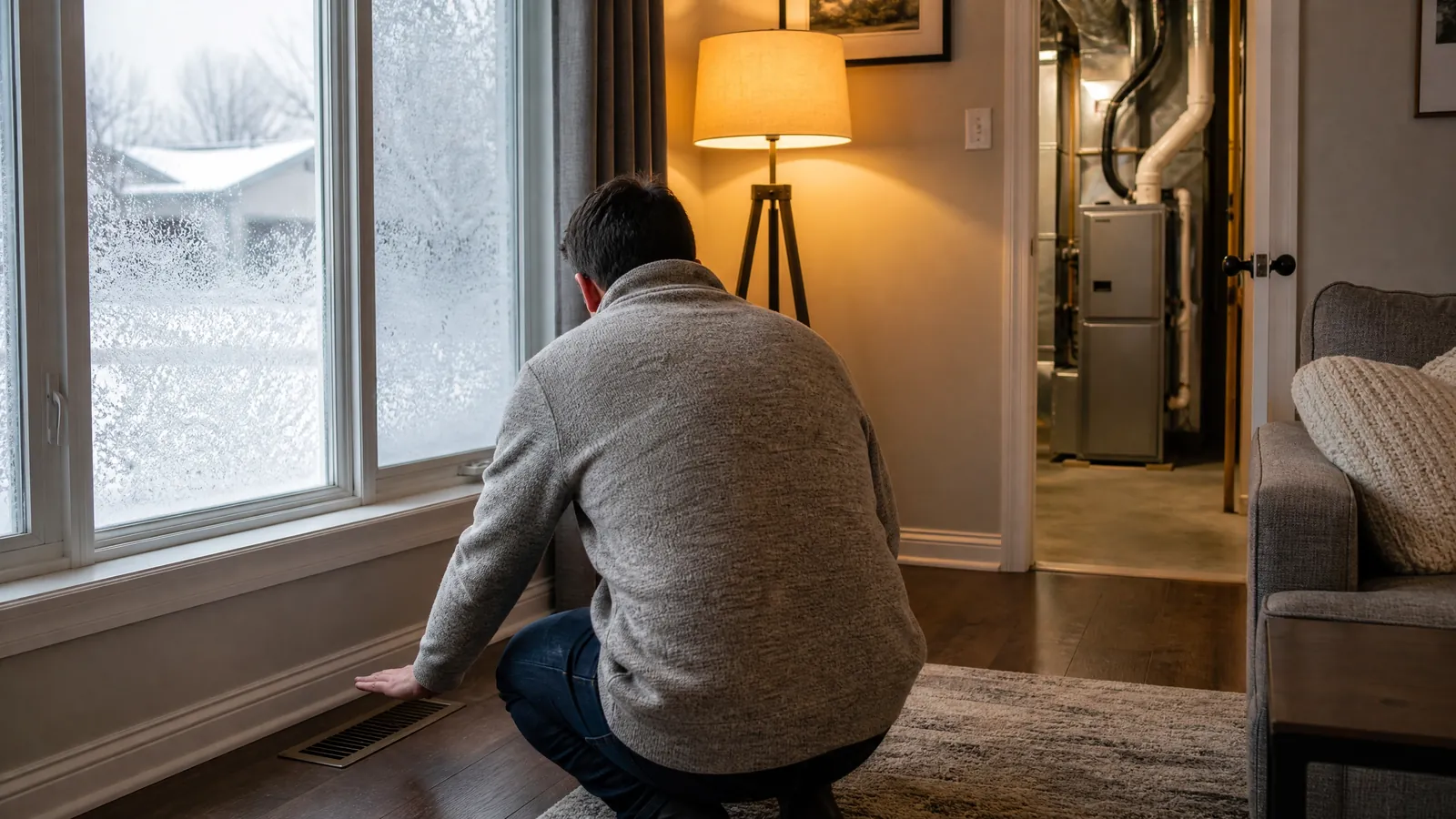
If money is tight, look at this one first
The Home Winterproofing Program from Enbridge Gas and Save on Energy is not a rebate, it is free work. If your home and household income levels qualify, it covers a free home energy assessment by an authorized delivery agent, then free insulation, draft proofing and Energy Star certified items. It has been streamlined into a single application with the Energy Affordability Program. Verified on the Enbridge Gas programme page, September 2, 2026.
The cheapest thing on this page
A clogged filter makes your furnace fan work against a restriction for the whole season, and replacing it costs a few dollars. The Government of Ontario’s own advice on using less electricity at home lists replacing furnace filters every three months as one of its named measures, alongside caulking and weather stripping around doors and windows to keep heat in. Those two sit on the same short official list for a reason: they are cheap and they work.
Three months is the general rule, but the right interval depends more on filter thickness than on the calendar, and a thin one inch filter loads up far faster than a four or five inch media filter. Our guide on how often to replace air filters by thickness sets out the intervals properly.
Gas or electricity, and why it changes the answer
What you burn decides which advice is worth your time, because the two fuels are billed on completely different structures. Most Peel Region homes heat with natural gas, so most readers here are looking at a gas bill, where the volume you burn is the whole story. An electrically heated home is billed on a plan that also charges you differently depending on the hour, which makes shifting when you use heat worth something that it simply is not worth on gas.
| If you heat with | Worth doing | Not worth your time |
|---|---|---|
| Natural gas furnace | Insulation, sealing, setback, filter, annual service | Shifting heating to off-peak hours. Gas is not billed by hour |
| Electric baseboards or furnace | Everything above, plus checking which price plan you are on | Assuming the default plan is the cheapest one for you |
| Heat pump with backup heat | All of the above, plus checking the backup is not running when it should not be | Turning it off overnight in deep cold, which can force the backup on |
Table 3. As of September 2, 2026. If you are weighing a switch rather than a tweak, our heat pump versus furnace running cost page does that arithmetic.
What does not lower a heating bill
Several popular tips cost you effort and give back almost nothing, and one of them is actively bad for the equipment. Naming them is more useful than adding a fifth thing to your list.
- Closing vents in unused rooms. A forced air system is balanced for a set amount of open duct. Closing vents raises static pressure, which the blower has to fight, and in some houses it pushes conditioned air out through duct leaks instead. Leave them open.
- Cranking the thermostat to heat the house faster. A furnace has one output. Setting 26 degrees rather than 21 does not make it arrive sooner, it just overshoots and costs more.
- Space heaters to “save” on central heating. Electric resistance heat is usually the most expensive heat in the house. Heating one room this way while the furnace still runs for the rest rarely comes out ahead.
- Replacing a working furnace to cut a bill. If the envelope leaks, a new furnace heats a leaky house slightly more efficiently. Do the assessment first, which is the line at the top of Table 2 that pays $600 CAD back.
Safety: two things are not savings measures
Never block or seal a furnace’s combustion air intake or its vent in an attempt to stop drafts. A gas appliance needs that air, and restricting it risks incomplete combustion and carbon monoxide. Never run an oven or a barbecue for heat. If you have a fuel burning appliance, you need a working carbon monoxide alarm, and in Ontario gas work belongs to a TSSA certified gas technician. If an alarm sounds, leave and call from outside.
Where should you start?
Two questions, and it points at the one action with the best return for your situation.
STEP 1 OF 2
When you sit still in winter, does the house feel draughty or just expensive?
STEP 2 OF 2
Has anyone assessed the house, and is budget the constraint?
Programme eligibility is decided by the programme, not by us. Confirm on the official pages linked in the sources.
How we know this
Every rebate figure in Table 2 was read from the Home Renovation Savings Program page at saveonenergy.ca on September 2, 2026, and the Home Winterproofing Program details were read from the Enbridge Gas programme page on the same day. The filter and weather stripping measures are named on the Government of Ontario’s own page on using less electricity at home. The ordering in Table 1 and the list of things not worth doing come from what our technicians find in Peel Region homes. There is no survey behind this page and no percentage is quoted, because we could not source one to a live primary reference. Where a figure is not ours to give, we have said so rather than borrowed one.
From our workshop and our vans
Company and furnace service footage from our own channel. None of these is about insulation or rebates, so treat them as background on who does the work rather than as part of the advice above.
Have the furnace checked before the cold sets in
We will tell you honestly whether your equipment is the problem or whether the money is better spent on the envelope. If it is the envelope, we will say so, and the assessment rebate is there for exactly that. Free in-home estimates, and 24/7 emergency service when the heat is already out.
Aire One Peel Heating & Cooling, 1625 Courtneypark Dr E, Mississauga, ON L5T 1V9 · Protection plans cover the annual visit if you would rather not think about booking it.
Frequently asked questions
How can I lower my HVAC bill?
Seal the drafts, add insulation where it is thin, set the thermostat back when you are asleep or out, and change the filter on schedule. Those four do most of the work, in that order. In Ontario the insulation and sealing carry rebates under the Home Renovation Savings Program, and the same work is free through the Home Winterproofing Program for households that qualify on income.
Is it cheaper to leave your heater on all day?
No. A house loses heat in proportion to the difference between the inside and outside temperature, so letting it cool while you are asleep or out slows the loss for those hours. The fuel used to bring it back up is less than the fuel saved. The belief that the reheat costs more is the most common myth in this subject.
What is the ideal thermostat setting in winter?
There is no single correct number, because comfort varies by household, clothing and health. The practical approach is to pick the lowest temperature that is genuinely comfortable while you are awake, then set it back several degrees while you sleep and while the house is empty. The setback is where the saving comes from, not the daytime number.
Is 22 degrees cold for a house?
No, 22 degrees Celsius is at the warm end of normal for a Canadian home in winter and most people find it comfortable in indoor clothing. If 22 feels cold to you while the thermostat reads 22, the number is not the problem: that usually points to draughts, cold surfaces or poor air distribution rather than to the setting.
Is 72 too high for heat in winter?
72 degrees Fahrenheit is about 22 degrees Celsius, which is comfortable but at the warm end. Most of the American advice Ontario readers find is written in Fahrenheit for a different climate and different billing, so convert before you act on it. Every degree you hold above what you actually need is paid for on every hour of the heating season.
Is it normal for heat on a furnace to run for 25 minutes?
Yes, in genuinely cold weather a long steady burn is normal and is more efficient than frequent short cycles. What is not normal is a furnace that runs constantly and still never reaches the set temperature, or one that starts and stops every few minutes. Either of those is worth a service call rather than a thermostat adjustment.
Final verdict
A heating bill is mostly decided by the building, not by the appliance, and the cheapest wins are the least exciting ones. Seal, insulate, set back, change the filter. Take the assessment rebate before you spend on equipment, because it tells you which of those your particular house actually needs, and check the Home Winterproofing Program first if money is tight, since it may cost you nothing at all.
Where we are not the best answer: if the assessment says your envelope is the problem, an HVAC contractor is not who you need first. Insulation and air sealing are the job of an insulation contractor or the programme’s own delivery agent, and we would rather tell you that than sell you a furnace that will not fix the number on your bill.
Sources and references
- Home Renovation Savings Program, Save on Energy and Enbridge Gas. All Table 2 amounts read September 2, 2026.
- Home Winterproofing Program, Enbridge Gas. Verified September 2, 2026.
- How to use less electricity at home, Government of Ontario. Filter and weather stripping measures, verified September 2, 2026.
- Technical Standards and Safety Authority, the Ontario authority for fuels safety and gas technician certification.
What we updated
September 3, 2026. Replaced the in-body photo. No facts or figures changed.
September 2, 2026. Rebuilt from a 339 word tip list. The previous version’s central advice was wrong: it told readers to hold one constant temperature and avoid moving the thermostat. That is corrected here. Added both Ontario programmes with amounts read from the programme pages the same day, three tables, the decision finder and the safety callout, and removed the unsourced savings percentage that this category repeats.
Mario Vaghei
General Manager, Aire One Peel Heating & Cooling
Mario read every rebate amount on this page off the programme pages on the day it was published rather than from any summary, and made the call to publish no savings percentage at all after the Canadian source for the usual figure turned out to be a dead link. He is General Manager, not a licensed trade, so the gas safety guidance here stops where a TSSA certified technician’s work begins.