


Why Is My Furnace Making Noise? A Sound by Sound Guide for Ontario Homes
Nine sounds, what each one usually is, which ones mean shut it off now, and what Ontario law says about who is allowed to open the burner compartment.

Published July 29, 2026 · Facts verified July 29, 2026
A furnace that has started making a noise it never used to make is telling you something specific, and the sound itself is most of the diagnosis. This guide walks through nine sounds a gas furnace in Ontario actually makes, what each one usually turns out to be, and which ones mean stop the furnace rather than book it for next week. If the noise has already turned into no heat at all, our furnace repair service in Mississauga covers same-day and after-hours calls across Peel Region.
- The 60 second safety check, before anything else
- Furnace noise chart: what each sound means
- Which furnace sounds are normal?
- Why is my furnace making a loud banging noise when it starts?
- Why is my furnace squealing or screeching?
- Rattling, whistling, and the filter you probably forgot
- What you can check yourself, and what Ontario law reserves for a gas technician
- What the repair behind the noise usually costs
- What happens if your furnace gets a safety violation tag
- Carbon monoxide alarms: what Ontario requires as of January 1, 2026
- Identify your furnace noise
- Watch: furnace work across Peel Region
- How we know this
- Choose the right next step
- Frequently asked questions
- The short version
A furnace makes noise when a moving part, the burner, or the airflow through it stops behaving normally, and the specific sound narrows the cause: a bang at startup usually means delayed ignition, a screech points to the blower motor, a rattle is often a loose panel, and a whistle is nearly always restricted airflow.
Three of those sounds are urgent and the rest are not. A bang or boom, a grinding metal-on-metal scrape, and any noise happening alongside a sounding carbon monoxide alarm all mean shut the furnace off and get a licensed gas technician in the same day. Rattles, whistles and soft hums can wait for a normal appointment.
Aire One Peel is a TSSA-registered fuels contractor serving Mississauga, Brampton, Etobicoke, Milton, Georgetown, Caledon and Bolton, with 24/7 emergency availability and free in-home estimates. If the sound has you worried, book a furnace repair visit or call 905-564-8545.
The 60 second safety check, before anything else
Before you identify the sound, rule out the two situations where the sound stops mattering. If your carbon monoxide alarm is going off, or anyone in the house has a headache, nausea or dizziness that eases when they step outside, leave the house first and diagnose later. If you smell rotten eggs or sulphur, that is the odourant added to natural gas, and it is handled the same way.
If your CO alarm is sounding: get everyone out of the house, then call 911 from outside. Do not go back in to open windows or reset the alarm first.
If you smell gas: leave the area and call the 24 hour Enbridge Gas emergency line at 1-866-763-5427, or 911, from a safe distance such as a neighbour's home. Enbridge Gas is explicit that you should not use phones or electronics near the leak, should not switch appliances or lights on or off, and should not use lighters or matches.
Neither of those? Then the sound is a diagnostic clue, and the chart below is the fastest way to read it.
Furnace noise chart: what each sound means
Each furnace sound maps to a small number of likely causes, and the urgency varies enormously between them. Use the table as a triage tool: find the row that matches what you are hearing, act on the urgency column, and read the detailed section below for the ones marked urgent.
| Sound you hear | What it usually is | Urgency | What to do first |
|---|---|---|---|
| Loud bang or boom at startup | Delayed ignition: gas collects in the burner before it lights | Same day | Switch the furnace off at the thermostat and book a TSSA-certified gas technician |
| Grinding or metal scraping | Blower wheel contacting its housing, or a failed motor bearing | Stop now | Shut the furnace off at the breaker before more damage is done |
| Booming or rumbling while running | Dirty or misaligned burners, or delayed ignition on every cycle | Same day | Book a combustion check, do not keep running it |
| High-pitched screech or squeal | Blower motor bearings, or a slipping belt on an older belt-drive unit | Within days | Note whether it fades after a minute, then book a service call |
| Repeated clicking with no heat | Failed igniter or flame sensor, or a gas valve that is not opening | Within days | Book a service call, stop cycling the thermostat |
| Humming or buzzing | Transformer, run capacitor, or a blower on low speed | Depends | Fine while running, book it if the hum continues when the furnace is idle |
| Rattling or vibration | Loose access panel, loose screws, or duct movement | Low | Check the panel screws are tight; if it comes from inside the cabinet, book |
| Whistling or hissing at the vents | Restricted airflow, most often a clogged filter or a blocked return | Low | Check the filter first |
| Popping or ticking in the ducts | Sheet metal expanding and contracting as the heat comes on | Normal | Nothing |
These causes apply the same way in Mississauga, Brampton, Etobicoke, Milton, Georgetown, Caledon and Bolton. What changes across the service area is the housing stock: older Brampton and Caledon homes are more likely to have belt-drive blowers and undersized returns, while newer Mississauga builds show more sealed-combustion and condensate-related noises.
Which furnace sounds are normal?
A working gas furnace is not silent, and several of its normal sounds get mistaken for faults every winter. The reliable signal is change: a sound your furnace has always made is usually fine, and a sound that started recently is worth reading properly.
| Sound | Normal? | Why it happens |
|---|---|---|
| Soft hum the whole time it runs | Normal | The inducer and blower motors turning |
| A click a second or two before ignition | Normal | The igniter energising and the gas valve opening |
| Light popping from the ducts as heat arrives | Normal | Sheet metal expanding with temperature |
| A rush of air from the registers | Normal | The blower reaching full speed |
| A trickle or gurgle on a high-efficiency unit | Normal | Condensate draining, unless it becomes a drip onto the floor |
| A single bang when the burner lights | Not normal | Gas accumulating before ignition |
| Screeching or squealing | Not normal | Bearings or a belt at the end of their life |
| Grinding | Not normal | Metal touching metal inside the blower assembly |
| Any sound the furnace has never made before | Investigate | The change is the diagnostic signal, not the volume |
Why is my furnace making a loud banging noise when it starts?
A loud bang or boom right as your furnace lights is almost always delayed ignition, which means gas has been collecting in the burner compartment for a moment before something ignites all of it at once. That is a small controlled explosion happening in a chamber that was not designed to absorb one, and it is the single furnace noise that most deserves a same-day call.
The usual causes are dirty burners, a weak or dirty igniter, low gas pressure, or a partially blocked burner port. None of them are dramatic on their own. What makes delayed ignition serious is repetition: every cycle stresses the heat exchanger, and a heat exchanger that cracks is how combustion gases including carbon monoxide reach the air your blower is pushing through the house. A cracked heat exchanger is also the one furnace fault that is never repaired, only replaced, which is covered in our guide on whether to repair or replace a furnace.
There is a second, harmless version worth knowing. A bang that comes from the ductwork rather than the furnace, a few seconds after the blower starts or stops, is usually sheet metal flexing, often called oil-canning. The tell is location: stand near the furnace and you can hear whether the noise is at the appliance or travelling in the ducts overhead.
Why is my furnace squealing or screeching?
A high-pitched squeal or screech nearly always comes from the blower assembly, either worn motor bearings or a belt slipping on an older belt-drive furnace. The blower is the part that moves heated air into the house, so it runs on every cycle and accumulates more hours than any other moving component in the system.
Two details change the answer. If the squeal appears for the first ten or twenty seconds of a cycle and then settles, a belt or a dry bearing is the likely candidate and you have time to book a normal appointment. If it is continuous, getting louder week over week, or has turned into a grinding scrape, the blower wheel may be contacting its housing, and running it further can destroy the motor and the wheel together. Shut it off at the breaker in that case.
Most furnaces built in the last twenty years use a direct-drive blower with no belt at all, so a squeal on a newer unit points at the motor or its bearings rather than a belt. Age matters here more than brand, which is why our page on how long a furnace lasts in Ontario is a useful companion read when a blower fault shows up on a unit past the fifteen year mark.
Rattling, whistling, and the filter you probably forgot
Rattling and whistling are the two furnace noises most likely to have a fix you can do yourself in five minutes. Rattling usually means a loose access panel or loose screws, since the panels sit against a cabinet that vibrates every cycle. Whistling and hissing at the registers usually mean the blower is trying to pull more air than the return can supply, and a clogged filter is the most common reason.
Restricted airflow is not just a noise problem. A furnace starved of return air runs hotter than designed, trips its high-limit switch, short cycles, and shortens the life of the heat exchanger. Filter neglect is the cheapest preventable cause of expensive furnace repairs we see, and it is covered in more depth in our article on how air filters affect HVAC efficiency.
- Switch the furnace off at the thermostat, and at the service switch on or beside the furnace if there is one.
- Find the filter slot, usually a narrow slot where the return duct meets the furnace cabinet, or a grille in a hallway wall or ceiling.
- Slide the old filter out and hold it up to a light. If light does not pass through it, it is overdue regardless of the date on it.
- Read the size off the old filter frame, printed as three numbers such as 16x25x1, and buy the same size.
- Slide the new one in with the airflow arrow pointing toward the furnace, which means pointing the same way the air travels into the blower.
- Switch the furnace back on and listen for a full cycle. If the whistle is gone, that was it. If it is not, the restriction is elsewhere and a technician should look at return sizing.
Possible downside, honestly. If the whistle disappears after a filter change, you did not need us and we would rather you knew that. What we would flag is the pattern: a filter that clogs in under three months usually means a duct or return problem the filter is quietly compensating for, and that is worth a look during a maintenance visit rather than an emergency call. Our heating protection plans exist for that kind of scheduled attention, though a homeowner who changes filters on time and books one tune-up a year genuinely does not need a plan.
What you can check yourself, and what Ontario law reserves for a gas technician
In Ontario, work on a natural gas appliance is regulated, and the line between a homeowner task and a technician task is a legal one rather than a matter of confidence. The Technical Standards and Safety Authority, the provincial regulator for fuels, certifies gas technicians as individuals and registers fuels contractors as companies, and opening the burner compartment of a gas furnace sits on the certified side of that line.
This is where the guidance on most furnace noise articles quietly stops applying here. Advice written for a United States audience routinely suggests lubricating bearings, adjusting burners or cleaning a flame sensor. Those instructions are not transferable to an Ontario home with a natural gas furnace.
| Task | Homeowner? | Why |
|---|---|---|
| Change the air filter | Yes | No gas work and no sealed compartment is opened |
| Tighten the furnace access panel screws | Yes | External fasteners on the cabinet |
| Clear storage away from the return air grille | Yes | Airflow only |
| Check thermostat batteries and settings | Yes | Low-voltage control circuit |
| Reset the furnace at the breaker | Yes | Household electrical panel |
| Open the burner compartment, clean or adjust burners | No | Gas appliance service, TSSA-certified gas technician only |
| Replace an igniter, flame sensor or pressure switch | No | Combustion components on a gas appliance |
| Replace an inducer motor or gas valve | No | Gas-carrying components, requires a combustion re-check afterward |
| Inspect or replace a heat exchanger | No | The carbon monoxide barrier itself |
| Clear a safety violation tag | No | The clearance carries the technician's certificate and contractor numbers |
What the repair behind the noise usually costs
Most furnace noises resolve into a part replacement in the $150 to $900 CAD range, with the diagnostic visit usually credited toward the repair when the work goes ahead the same day. The number that matters is not the part price but the ratio: once a single repair approaches half the cost of a new furnace on a unit past fifteen years, replacement is usually the better spend.
| Noise | Likely repair | Typical GTA range | Source note |
|---|---|---|---|
| Repeated clicking, no heat | Igniter or flame sensor | $150 to $400 CAD | Aire One Peel published range, July 2026 |
| Screech, grind, or heavy hum | Blower motor | $400 to $900 CAD | Aire One Peel published range; Carrier Canada lists $405 to $945 CAD for a blower motor replacement |
| Erratic behaviour with buzzing | Control board | $400 to $900 CAD | Aire One Peel published range, July 2026 |
| Bang at startup, rumbling | Burner cleaning and combustion check | Quoted after diagnosis | Varies by burner condition |
| Bang at startup on an aged unit | Cracked heat exchanger | Not repaired, unit replaced | Safety, not economics |
| Any of the above on a furnace past 15 years | New furnace installed | $3,500 to $7,500 CAD | Aire One Peel published range, July 2026 |
Prices in Canadian dollars (CAD), verified July 2026, subject to change. Ranges reflect part and labour on a scheduled call; emergency and after-hours dispatch varies by contractor, and Aire One Peel's own claim is that it does not add an after-hours charge.
What happens if your furnace gets a safety violation tag
If a certified gas technician finds an unsafe condition while investigating your furnace noise, they are legally required to issue a safety violation tag, commonly called a red tag, and the type of tag determines whether your gas stays on. This is the part of the process most homeowners have never heard of until it happens in their own basement, and it is worth knowing before a technician is standing in front of your furnace.
| Type A, immediate hazard | Type B, unacceptable condition | |
|---|---|---|
| What it means | An immediate hazard to life or property | The appliance does not meet safety requirements but is not an immediate hazard |
| Your gas supply | Shut off to the appliance right away | Stays on for now |
| Your deadline | The appliance cannot be used until the condition is corrected and cleared | Up to 42 days to complete repairs or replacement |
| If nothing is done | The gas stays off | The natural gas supply is shut off |
| Who clears it | A TSSA-registered contractor completes the work and submits the clearance, with the technician's certificate and contractor numbers on it | |
Source: Enbridge Gas safety violation page, verified July 2026.
Two things are worth saying plainly here. First, you are free to hire any TSSA-registered contractor to clear a tag, including one that did not issue it, and a second opinion is a reasonable thing to ask for. Second, a tag is not a sales tactic, and any contractor who issues one should be able to point at the specific condition on the appliance and explain it in plain language. If that explanation is not offered, ask for it in writing.
Carbon monoxide alarms: what Ontario requires as of January 1, 2026
Ontario expanded its carbon monoxide alarm requirements on January 1, 2026, and most homes with a gas furnace now need more alarms than they did in 2025. The change came through amendments to the Fire Code, Ontario Regulation 213/07, and the practical effect is that alarms are required on every storey rather than only near bedrooms.
| Where the alarm goes | Required | In force |
|---|---|---|
| Adjacent to each sleeping area, such as the hallway outside the bedrooms | Yes | Existing requirement |
| On every storey of the home, including storeys with no bedrooms | Yes | January 1, 2026 |
| In an apartment or condo unit containing a fuel-burning appliance or fireplace | Yes | Existing requirement |
| In public corridors heated by air from a fuel-burning appliance | Yes | January 1, 2026 |
| In a unit heated by air from a fuel-burning appliance located outside it | Yes | January 1, 2026 |
Source: Government of Ontario carbon monoxide safety page and the TSSA notice on the Fire Code changes, verified July 2026.
The trigger for the rule is having a fuel-burning appliance, a fireplace, or an attached garage, which describes most detached and semi-detached homes across Mississauga, Brampton and Caledon. If your furnace has started making a noise you do not recognise, checking that you actually meet the current alarm requirement is a ten minute job that costs less than any service call in this article.
Identify your furnace noise
Answer three questions and this narrows your sound to a likely cause and an honest next step. Every answer it can give also appears in the tables above, so nothing here is exclusive to the tool.
Watch: furnace work across Peel Region
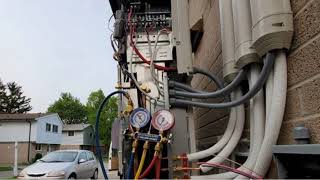
These three clips show the furnace work behind the repairs described above, filmed on real jobs across Mississauga, Brampton, Etobicoke and Milton. Use the arrows or the dots to move through the stack.


How we know this
Everything in this article traces to one of three places, and none of it comes from a testing lab we do not run. The sound-to-cause mapping is compiled from furnace service calls completed by Aire One Peel technicians across Peel Region, cross-checked against manufacturer troubleshooting documentation for the equipment we install.
- Regulatory content: verified July 29, 2026 against the Enbridge Gas safety violation page, the Government of Ontario carbon monoxide safety page, and the TSSA notice on the Fire Code amendments.
- Cost ranges: Aire One Peel's own published GTA repair and installation ranges, with the Carrier Canada blower motor figure carried as an independent cross-check.
- Compiled by Mario Vaghei, General Manager, from the above sources. No reviewer credential is claimed on this page because no TSSA-certified gas technician has been confirmed by name to review it.
Choose the right next step
The correct next move depends on which sound you have and how old the furnace is, not on how alarming it sounded at 2am. Four common situations cover most of them.
Shut the furnace off and book same day. Emergency furnace repair runs 24/7 across Peel Region.
Book a normal service call this week. Compare the fix against the unit's age using repair versus replace.
Check the panel screws and the filter first. If it persists, it is worth a look at airflow and filtration.
Get the repair quote and a replacement quote together. Start with furnace lifespan in Ontario.
Where a competitor is the better call. If you rent your furnace, the rental agreement almost certainly covers this repair, and calling us instead of the rental provider means paying twice for the same visit. Choose Reliance Home Comfort or whoever holds your rental contract in that case. It is worth checking your bill before you book anything, and if you are weighing the model itself, our page on renting versus buying a furnace is honest about where rental wins.
Still not sure what you are hearing?
A TSSA-registered contractor can identify the sound in one visit, and tell you honestly whether it is a filter, a bearing, or a reason to start pricing a replacement. Free in-home estimates on replacements, with financing and rent-to-own available.
Frequently asked questions
Is it dangerous if my furnace is making noise?
Most furnace noises are not dangerous, but three of them are: a bang or boom at startup, a grinding metal-on-metal scrape, and any noise happening at the same time as a sounding carbon monoxide alarm. Those three mean shut the furnace off and call a TSSA-certified gas technician the same day. Rattles, whistles and soft hums can safely wait for a scheduled appointment.
Why is my furnace making a loud banging noise when it starts?
A loud bang at startup is usually delayed ignition, where gas collects in the burner for a moment and then lights all at once. Dirty burners, a weak igniter or low gas pressure are the common causes. It matters because each repeated cycle stresses the heat exchanger, and a cracked heat exchanger can release carbon monoxide. Book a combustion check rather than waiting it out.
Why is my furnace making a rattling noise?
Rattling usually means a loose access panel or loose screws on the furnace cabinet, which vibrates on every cycle. Tightening the panel screws resolves a good share of rattles in a couple of minutes. If the rattle clearly comes from inside the cabinet rather than the panels, or if it continues after the screws are tight, book a service call before something works itself loose further.
Why is my furnace squealing?
A squeal or screech nearly always comes from the blower assembly, either worn motor bearings or a slipping belt on an older belt-drive unit. A squeal that fades after the first twenty seconds usually gives you time for a normal appointment. A squeal that is continuous, getting louder, or turning into a grind means shutting the furnace off at the breaker to avoid destroying the motor and blower wheel.
Can I fix a noisy furnace myself?
You can change the filter, tighten the access panel screws, clear obstructions from the return grille and check the thermostat, and those four steps resolve most rattles and whistles. You cannot open the burner compartment or touch gas-carrying components, because in Ontario that work requires a TSSA-certified gas technician. Advice written for a United States audience about cleaning burners or flame sensors does not apply here.
How much does it cost to fix a noisy furnace in Mississauga?
Most repairs behind a furnace noise land between $150 and $900 CAD, with igniters and flame sensors at the lower end and blower motors or control boards at the upper end. A diagnostic visit is usually credited toward the repair when the work goes ahead the same day. A new furnace installed in Mississauga runs about $3,500 to $7,500 CAD, which is the comparison that matters once a unit is past fifteen years.
Should I turn off my furnace if it is making a loud noise?
Turn it off if you hear a bang, a boom, or grinding metal, or if a carbon monoxide alarm is sounding. For grinding, shut it off at the breaker rather than the thermostat so the blower cannot restart. For rattles, whistles and hums, leaving it running is normally fine while you wait for an appointment, particularly in the middle of an Ontario winter when losing heat creates its own problems.
The short version
The sound your furnace makes is a reliable shortcut to the fault behind it, and the split is roughly three urgent sounds against six that are not. Bangs, grinding and anything alongside a CO alarm are same-day problems. Screeches and clicking are this-week problems. Rattles, whistles, hums and duct ticking are usually either a five minute fix or nothing at all.
What is specific to Ontario is what happens next. Gas work on your furnace is restricted to TSSA-certified technicians, a safety violation tag can take your gas supply off the appliance with a 42 day clock attached to the milder version, and since January 1, 2026 your home very likely needs carbon monoxide alarms on every storey rather than just outside the bedrooms. Those three facts change what a furnace noise means here compared with the American guides that dominate this search.
If you want the sound identified rather than guessed at, book a furnace repair visit or call 905-564-8545. Aire One Peel serves Mississauga, Brampton, Etobicoke, Milton, Georgetown, Caledon and Bolton, 24/7.
Compiled this guide from Aire One Peel furnace service records across Peel Region, manufacturer troubleshooting documentation for the equipment the company installs, and the current Enbridge Gas, TSSA and Government of Ontario safety pages, all re-verified on July 29, 2026. General Manager is a company role and not a trade credential, and no gas technician certification is claimed anywhere on this page.
Sources and references
- Enbridge Gas, Safety Violation. Type A and Type B tags, the 42 day correction window, and the requirement to hire a TSSA-registered contractor. Verified July 29, 2026.
- Enbridge Gas, Smell Natural Gas?. The 24 hour emergency line at 1-866-763-5427 and what not to do near a suspected leak. Verified July 29, 2026.
- Government of Ontario, Carbon monoxide safety. Alarm placement requirements, including the every-storey rule in force January 1, 2026. Verified July 29, 2026.
- Technical Standards and Safety Authority, Changes to the Ontario Fire Code. The amendments to Ontario Regulation 213/07 behind the new alarm requirements. Verified July 29, 2026.
- Carrier Canada, Furnace blower motor repair and replacement guide. Canadian blower motor replacement range of $405 to $945 CAD. Verified July 29, 2026.