



By Mario Vaghei, General Manager, Aire One Peel Heating & Cooling · Published November 27, 2024 · Facts verified September 3, 2026
Furnace carbon monoxide is the one furnace problem where waiting is not an option, and it is also the one most often confused with simple old age. A twenty year old furnace that burns cleanly and vents properly is not producing carbon monoxide in your house. A six year old furnace with a cracked heat exchanger or a blocked vent can be. Age is a maintenance and money question, and our furnace lifespan guide handles that one. This page is about the safety question only: what actually goes wrong, what you can notice yourself, and what Ontario law now requires of your home.
On this page
- What does Ontario’s 2026 alarm law require?
- What carbon monoxide does before you notice it
- Furnace carbon monoxide: what actually fails inside
- The signs, sorted by what to do about them
- The furnace carbon monoxide checks a technician runs
- Does age alone make a furnace dangerous?
- Emergency, service call, or annual check?
- Frequently asked questions
- Final verdict
Short answer
A furnace produces dangerous carbon monoxide when combustion or venting fails, usually through a cracked heat exchanger, a blocked vent, or starved combustion air, not simply because it is old. From January 1, 2026, Ontario requires a carbon monoxide alarm on every storey and next to every sleeping area in homes with a fuel-burning appliance, fireplace or attached garage.
What does Ontario’s 2026 alarm law require?
Ontario expanded its carbon monoxide alarm rules on January 1, 2026, and the change is larger than most homeowners realise. The Technical Standards and Safety Authority states that a carbon monoxide alarm must now be installed “adjacent to each sleeping area (near all bedrooms)” and “on every storey (floor) of your home, including storeys that do not have a sleeping area”. Before this, one alarm outside the bedrooms satisfied the Fire Code in most houses. Now a typical two storey Peel Region home with a basement furnace needs three. Table 1 sets out who the rule catches, and it is broader than gas heating alone.
| Your home has | Covered by the rule? | What that means in practice |
|---|---|---|
| A gas, propane, oil or wood burning appliance | Yes | Furnace, water heater, stove, dryer. Most Peel Region homes qualify on the furnace alone |
| A fireplace | Yes | Gas or wood, whether or not you ever light it |
| An attached garage | Yes | Catches all-electric homes too. A car warming up is a carbon monoxide source |
| Heating air that comes from a fuel-burning appliance outside the home | Yes | Relevant to some condo and multi-unit arrangements |
| All-electric heating, no fireplace, detached or no garage | Not by this rule | An alarm is still sensible if a neighbour shares a wall with fuel-burning equipment |
Table 1. Coverage and placement quoted from the Technical Standards and Safety Authority’s notice on the Ontario Fire Code carbon monoxide alarm changes, read September 3, 2026. The Fire Code requirement sits in Section 2.16 of O. Reg. 213/07. Confirm placement with your municipal fire department if your layout is unusual.
What carbon monoxide does before you notice it
Carbon monoxide cannot be seen or smelled, which is the entire reason the alarm requirement exists. Health Canada describes it as “a tasteless, odourless and colourless gas at room temperature” and warns that “breathing carbon monoxide reduces your body’s ability to carry oxygen in your blood and can affect you before you notice its presence.” That last clause is the danger: the early symptoms arrive before any warning your senses can give you, and they read as ordinary winter illness. Health Canada also notes the risk indoors is greatest in the colder months, because that is when Canadian homes are running fuel-burning appliances hardest.
| Exposure level | Health Canada’s described effects |
|---|---|
| Low | Tiredness, nausea, shortness of breath and headaches |
| Moderate | Impaired motor functions, including muscle weakness and loss of function of body parts |
| High | Poor vision, dizziness, difficulty thinking and chest pains |
| Very high | Convulsions, coma and death |
Table 2. Effects as described by Health Canada, Carbon monoxide: Symptoms of exposure, read September 3, 2026. This is general public health information, not medical advice. If you suspect exposure, get everyone outside into fresh air and call 911.
If the alarm sounds, do this first
Get everyone, including pets, outside into fresh air immediately, then call 911 from outside. Do not open windows first, do not go looking for the source, and do not go back in to shut anything off. Emergency services can measure the level; you cannot. Only after they have cleared the house should a TSSA certified gas technician be called to find and repair the fault.
One pattern worth knowing: if the headaches, tiredness or nausea ease when you leave the house and return when you come back, treat that as a possible carbon monoxide symptom and get the appliances checked, even if the alarm has never sounded.
Furnace carbon monoxide: what actually fails inside
A gas furnace is designed so the burnt gases never touch the air you breathe, and carbon monoxide becomes a household problem only when that separation breaks down. Inside the cabinet, the flame burns inside a sealed steel heat exchanger; your house air blows over the outside of it, picks up the heat, and goes to the ducts. The exhaust leaves through the vent. Three things can break that arrangement, and all three are what the annual inspection is looking for.
The heat exchanger is the one people have heard of. Steel expands when it heats and contracts when it cools, and after enough cycles a fatigue crack can open. A furnace that short cycles, because it is oversized or because airflow is restricted by a clogged filter, goes through far more of those cycles per winter than one that runs steadily, which is why filter neglect and oversizing are safety issues and not only efficiency ones. The vent and combustion air problems are more often external: a bird nest, ice at the termination, a renovation that sealed the room the furnace breathes from, or a powerful range hood pulling exhaust back down a natural draft vent.
The signs, sorted by what to do about them
Not every furnace carbon monoxide sign is an emergency, and treating them all the same is how people either panic or ignore something real. Table 3 sorts what you can actually observe by the response it deserves. The rule underneath it is simple: anything involving how people in the house feel goes to the top of the list regardless of what the furnace looks like.
| What you notice | Urgency | What to do |
|---|---|---|
| The carbon monoxide alarm is sounding | Emergency | Everyone outside, then call 911 from outside |
| Headaches, nausea or tiredness that ease when you leave the house | Emergency | Outside, then 911. Do not wait for the alarm to agree with you |
| A smell of exhaust or burning near the furnace | Emergency | Carbon monoxide has no smell, but the other combustion gases do. Treat it as spillage |
| Burner flame is yellow or orange and lazy rather than crisp blue | Same day service | A classic sign of incomplete combustion. Shut the furnace off and book a technician |
| Soot or black streaking around the furnace or vent | Same day service | Evidence that combustion products have been going where they should not |
| Heavy condensation on nearby windows whenever the furnace runs | Book this week | Can indicate exhaust spilling into the room. Worth a venting check |
| Rust or flaking metal on the vent pipe or its connections | Book this week | Vent corrosion is a leak in progress |
| Furnace is simply old and you are worried | Annual inspection | Book the yearly visit. Age on its own is not a hazard |
Table 3. Furnace carbon monoxide signs compiled from Health Canada’s description of exposure symptoms, TSSA’s carbon monoxide guidance, and what our technicians find on service calls across Peel Region. September 3, 2026. When in doubt, treat it as the higher urgency.
The furnace carbon monoxide checks a technician runs
The furnace carbon monoxide checks below exist because none of the three failures in the diagram can be seen from outside the cabinet. TSSA’s advice to homeowners is direct: “Have all fuel-burning appliances inspected annually through the services of a TSSA-registered fuel contractor”, and it pairs that with “Install certified CO alarms in your home, regularly test them and replace in accordance with manufacturer’s instruction.” TSSA also points out that you are the one responsible for asking for the inspection; nobody schedules it for you. Table 4 covers what that visit actually involves on the safety side, which is a different list from the efficiency checks in a general tune-up.
| Safety check | What it is looking for |
|---|---|
| Heat exchanger inspection | Cracks, holes and separation, by camera and by flame behaviour with the blower running |
| Combustion analysis | Carbon monoxide in the flue gas, measured in parts per million rather than judged by eye |
| Draft and spillage test | Whether exhaust actually leaves, including with the range hood and dryer running |
| Vent condition, from appliance to termination | Corrosion, disconnection, blockage, ice and nesting at the outside end |
| Combustion air supply | Whether the appliance still has the air it was installed with, after any renovation |
| Burner and flame condition | Rust, debris and flame colour, the visible face of incomplete combustion |
Table 4. The safety portion of an annual furnace inspection as our technicians carry it out in Peel Region, aligned to TSSA’s guidance that fuel-burning appliances be inspected annually by a registered contractor. September 3, 2026.
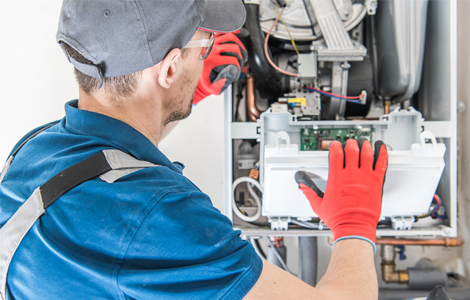
If a certified technician finds a genuinely unsafe condition, they are required to tag the appliance rather than leave it running, and in the worst cases the gas is shut off until a certified contractor has corrected the fault. That is not a sales tactic and it is not something the technician can waive for you; only a certified gas technician can clear it. It is also rarer than the internet suggests. Most of what we find on an annual visit is a dirty burner or a tired vent connector, fixed the same morning.
Does age alone make a furnace dangerous?
No, and this is where the honest answer differs from the one that sells furnaces. Age raises the odds of the failures above, because metal fatigue accumulates and vent connectors corrode, but a twenty year old furnace that passes a combustion analysis and a spillage test is safe to run this winter. What age genuinely changes is the value of the inspection: on a newer unit it is preventive, and on an older one it is the thing standing between you and an unnoticed fault.
Two nearby questions belong on other pages, so they are only pointed at here. How long yours should last, and what to expect at each age, is on our furnace lifespan guide. Whether the repair bill justifies replacement is on our repair or replace guide, which sets out the arithmetic. And if the failure is the heat exchanger specifically, whether the manufacturer pays for it is the subject of our furnace warranty guide. This page stops at the safety line.
Emergency, service call, or annual check?
Two questions, and it tells you which of the three this is.
STEP 1 OF 2
Is anyone in the house feeling unwell, or is an alarm sounding?
STEP 2 OF 2
What can you see at the furnace itself?
.
.
Emergency. Everyone outside now, then call 911.
People feeling unwell plus visible signs of bad combustion is the combination that needs emergency services, not a service booking. Get everyone and any pets outside into fresh air, call 911 from outside, and do not go back in to switch anything off. Once the house has been cleared, book a TSSA certified technician to find the fault.
Emergency. Everyone outside now, then call 911.
Symptoms come first regardless of what the equipment looks like, and vent corrosion or persistent condensation is consistent with exhaust going where it should not. Outside, then 911 from outside. Do not open windows first and do not investigate. A certified technician comes after the house has been cleared.
Emergency anyway. Symptoms outrank a tidy looking furnace.
Carbon monoxide is colourless and odourless, so a furnace that looks perfectly normal tells you nothing. Health Canada notes it can affect you before you notice its presence. Get everyone outside and call 911 from outside. The source may also be a water heater, a fireplace or a car in an attached garage.
Shut the furnace off and book a technician today.
A yellow or lazy flame, soot, or an exhaust smell all point to incomplete combustion or spillage, which is the condition that produces carbon monoxide even though nobody has symptoms yet. Switch the furnace off at the thermostat and the service switch, and get a TSSA certified technician out the same day rather than waiting for the annual visit.
Book a venting inspection this week.
Vent corrosion and heavy condensation whenever the furnace runs both point at the venting rather than the burner, and neither is an emergency on its own. It is also not something to leave until spring, because a vent problem gets worse in the coldest weather when ice can form at the termination. Ask specifically for a draft and spillage test.
Book the annual inspection. Age on its own is not a hazard.
An older furnace with no symptoms and no visible signs is not dangerous, it is due for its yearly check. TSSA advises having all fuel-burning appliances inspected annually by a registered contractor, and reminds homeowners that you are the one who has to ask for it. While you are at it, confirm you have an alarm on every storey, which Ontario has required since January 1, 2026.
A routing guide, not a diagnosis, and not medical advice. If you suspect exposure, leave the house and call 911.
How we know this
The alarm placement rules and the annual inspection advice are quoted from the Technical Standards and Safety Authority, read September 3, 2026. The exposure effects and the description of carbon monoxide as colourless, odourless and tasteless are quoted from Health Canada, read the same day. The failure mechanisms in the diagram and the safety checks in Table 4 are what our own TSSA certified technicians look for on annual visits in Peel Region. We have not published a figure for how often heat exchangers crack, because we have no sample large enough to support one and no Canadian primary source publishes it. Nothing here is medical advice.
Who comes out on a safety call
Company and furnace footage from our own channel. None of these is a carbon monoxide walkthrough, so treat them as background on the people doing the inspection rather than as safety instruction.
Book the annual safety inspection
Our furnace service visit includes the combustion analysis, the draft and spillage test and the heat exchanger inspection in Table 4, carried out by TSSA certified technicians. If we find nothing wrong we will tell you that and leave. 24/7 emergency service across Peel Region when something is already wrong.
If a carbon monoxide alarm is sounding, do not call us first. Get everyone outside and call 911. Aire One Peel Heating & Cooling, 1625 Courtneypark Dr E, Mississauga, ON L5T 1V9. Serving Mississauga, Brampton, Etobicoke, Milton, Georgetown, Caledon and Bolton.
Frequently asked questions
Can a furnace leak carbon monoxide?
Yes, when combustion or venting fails. The usual causes are a cracked heat exchanger letting exhaust reach the house air, a blocked or corroded vent letting it spill back into the room, or starved combustion air causing incomplete burning. A furnace burning and venting correctly does not put carbon monoxide into your home, which is what the annual inspection confirms.
What are the symptoms of carbon monoxide from a furnace?
Health Canada describes tiredness, nausea, shortness of breath and headaches at low levels, muscle weakness at moderate levels, then poor vision, dizziness, difficulty thinking and chest pains at high levels. The pattern that should alarm you is symptoms that ease when you leave the house and return when you come back. Get outside and call 911.
How many carbon monoxide alarms does Ontario require?
Since January 1, 2026, TSSA states an alarm must be installed adjacent to each sleeping area and on every storey of the home, including storeys without a sleeping area. The rule covers any home with a fuel-burning appliance, a fireplace or an attached garage. A two storey house with a basement furnace therefore needs three, not one.
Is an old furnace dangerous?
Not by age alone. Age raises the odds of a cracked heat exchanger or a corroded vent, but a twenty year old furnace that passes a combustion analysis and a spillage test is safe to run. What changes with age is how much the annual inspection matters, because on older equipment it is the only thing that catches a fault you cannot see.
What should I do if my carbon monoxide alarm goes off?
Get everyone including pets outside into fresh air, then call 911 from outside. Do not open windows first, do not search for the source, and do not go back inside to switch appliances off. Emergency services can measure the level in the house. Only after they clear it should a TSSA certified gas technician be called to find the fault.
How often should a furnace be inspected for safety in Ontario?
Once a year. TSSA advises having all fuel-burning appliances inspected annually through a TSSA-registered fuel contractor, and notes that homeowners are responsible for requesting the inspection themselves. The safety portion covers the heat exchanger, combustion analysis, draft and spillage testing, vent condition and combustion air supply.
Final verdict
The safety question and the age question are different questions, and mixing them costs people money on one side and safety on the other. A furnace becomes dangerous when the heat exchanger, the vent or the combustion air fails, and those failures are found by a combustion analysis and a spillage test rather than by looking at the date on the label. Book the annual inspection, and make sure your alarms match what Ontario has required since January 1, 2026.
Where we are not the best answer: if an alarm is sounding or anyone feels unwell, we are the wrong number to call. Emergency services can measure the carbon monoxide level in your house and we cannot do that from the van. Get everyone out, call 911, and bring us in afterwards to find and fix the fault. We would rather say that plainly than be the first call in an emergency where minutes matter.
Sources and references
- Changes to Ontario Fire Code: New Requirements for CO Alarms, Technical Standards and Safety Authority. Placement and coverage, effective January 1, 2026. Read September 3, 2026.
- Be in the Know about CO: Take Action. Think Safe., Technical Standards and Safety Authority. Annual inspection by a registered fuel contractor. Read September 3, 2026.
- Carbon monoxide: Symptoms of exposure, Health Canada. Effects by exposure level. Read September 3, 2026.
- Carbon monoxide: Overview, Health Canada. Colourless, odourless and tasteless; household sources; higher risk in colder months.
- O. Reg. 213/07, Fire Code, Government of Ontario. Section 2.16, installation of carbon monoxide alarms.
What we updated
September 3, 2026. Rebuilt and refocused. The previous version mixed furnace age, efficiency and carbon monoxide into one general article, which duplicated two stronger guides on this site and gave the safety material only two sentences. This version covers the safety question alone: Ontario’s expanded alarm rules effective January 1, 2026, Health Canada’s exposure effects, the three failures that actually produce carbon monoxide, a signs table sorted by urgency, and what an annual safety inspection covers. Age and cost now link out rather than being re-argued here.
Mario Vaghei
General Manager, Aire One Peel Heating & Cooling
Mario rewrote this page around the safety question after the previous version implied that an old furnace is dangerous by itself, which is not true and which sells furnaces to people who do not need one yet. He is General Manager and not a certified gas technician, so every diagnostic step described here is the work of our TSSA certified technicians, and the emergency instructions come from Health Canada and TSSA rather than from us.