





By Mario Vaghei, General Manager, Aire One Peel Heating & Cooling · Published November 24, 2023 · Facts verified September 3, 2026
Heat pumps in cold weather are the most argued-about topic in Ontario home heating, and most of the argument runs on brochure numbers. This page runs on two others: the outdoor temperature Peel Region homes are actually designed for, and the efficiency a cold climate heat pump actually delivered when Natural Resources Canada measured one through an Ottawa winter. Put those side by side and the question mostly answers itself. If you are weighing the dollars rather than the physics, our heat pump versus furnace running cost page does that arithmetic; this one stays on what the cold does.
On this page
- What happens to heat pumps in cold weather as the temperature drops?
- How cold does it actually get in Peel Region?
- What takes over when the heat pump cannot keep up?
- What should the spec sheet say for an Ontario winter?
- Why does it blow steam and ice up in January?
- Does Ontario pay for a cold climate heat pump?
- Which electricity utility do you call in your city?
- Which setup fits your house?
- Frequently asked questions
- Final verdict
Short answer
Heat pumps in cold weather keep working in Ontario if they are the cold climate type: Natural Resources Canada measured one delivering heat at a COP of 1.5 at minus 21 degrees Celsius, and the Toronto area is designed to minus 18. Below the unit’s rated minimum, an electric or gas backup carries the house, which is why the backup is part of the design, not a failure.
What happens to heat pumps in cold weather as the temperature drops?
A heat pump loses efficiency and capacity gradually as the outdoor air gets colder, and the two numbers that describe that slide are the coefficient of performance and the minimum operating temperature. The COP is how many units of heat the unit delivers per unit of electricity it uses. Electric baseboards score exactly 1.0. Anything above 1.0 is heat pulled from outdoor air for free, and a cold climate unit stays well above 1.0 in weather that would shut a conventional one down.
The best public Canadian measurement comes from Natural Resources Canada, which ran a cold climate air source heat pump through a heating season at its Canadian Centre for Housing Technology in Ottawa, with a 10 kW electric resistance backup. Heating COP ranged from an average of 3.0 at plus 4.9 degrees down to 1.5 at minus 21.1 degrees, and the system held comfort in the house at the coldest temperatures it saw, below minus 21, without leaning only on the resistance heater. Table 1 puts those measured points on the same ladder as the two temperatures that matter in Peel Region.
| Outdoor temperature | What the data says | Source | What you notice indoors |
|---|---|---|---|
| +4.9 C | Measured heating COP 3.0: three units of heat per unit of electricity | NRCan CCHT field study, Ottawa | Nothing. Long, quiet, low-speed runs |
| -15 C | Warm end of the minimum operating range NRCan gives for newer units (-15 to -25 C) | NRCan heat pump guide | A conventional unit may already be handing off to backup here. A cold climate unit is still the main heat |
| -18 C | January 2.5 per cent design temperature for the Toronto area, the value heating systems are sized to | MMAH Supplementary Standard SB-1, via OBC 9.33.3.2 | Longer run times, supply air noticeably cooler than a furnace, house still at setpoint if the unit was sized to this line |
| -21.1 C | Measured heating COP 1.5, comfort maintained without relying only on resistance heat | NRCan CCHT field study, Ottawa | Backup stages may cut in during recovery from setback. Still cheaper than pure electric heat |
| -25 C | Cold end of the minimum operating range NRCan gives for newer units | NRCan heat pump guide | At or below the rated minimum, backup carries the house by design |
Table 1. The two COP figures are from a single NRCan field study on one cold climate unit in Ottawa, published September 2013, and NRCan did not publish readings at the intermediate temperatures, so none are invented here. Design temperature read from SB-1 for the Toronto area, applied to Mississauga and Brampton. Verified September 3, 2026.
Where the brochure claims come from
Most competing pages quote “rated to minus 30” or “100 per cent capacity at minus 15” from a manufacturer’s literature. Those figures can be true for a specific model, but they are laboratory ratings at one test point, not a winter of operation in a Canadian house. NRCan’s published range for newer units is a minimum operating temperature of minus 15 to minus 25 degrees. When a claim sits outside that, ask for the model’s own capacity table at minus 18 and minus 25, not the headline.
How cold does it actually get in Peel Region?
Heating systems in the Toronto area are sized to an outdoor design temperature of minus 18 degrees Celsius, not to the coldest night anyone remembers. The Ontario Building Code, at Sentence 9.33.3.2, sends designers to MMAH Supplementary Standard SB-1, Climatic and Seismic Data, and tells them to use the 2.5 per cent design temperature criteria. That 2.5 per cent means the outdoor temperature is colder than the design value for roughly two and a half per cent of January hours, a handful of nights in a typical year.
That single number reframes the whole question about heat pumps in cold weather. A cold climate heat pump with a rated minimum of minus 25 is rated seven degrees past the line Mississauga and Brampton furnaces are already sized to. The nights that drop below minus 18 are the same nights a gas furnace is also running flat out; the difference is that the heat pump may need its backup for a few hours while the furnace simply burns more gas. Neither system is oversized for the average January day, and neither should be.
What takes over when the heat pump cannot keep up?
A backup heat source is part of every Ontario design for heat pumps in cold weather, and the choice between electric resistance and a gas furnace is the biggest decision on the quote. Electric resistance is a heating coil in the air handler; it is simple, it is always there, and it costs the same per unit of heat as a baseboard. A dual fuel system keeps or adds a gas furnace and lets the thermostat hand over to it below a set outdoor temperature. Table 2 sets out the mechanics, not the running cost, which lives on the running cost page.
| Backup type | How the handoff works | Who is allowed to install it | Best fit |
|---|---|---|---|
| Electric resistance strips | Stages on when the heat pump alone cannot hold setpoint, or during defrost. The heat pump keeps running alongside it | Electrical work under ESA rules; refrigerant side under O. Reg. 463/10 | Homes with no gas line, or electrically heated homes replacing baseboards |
| Dual fuel: gas furnace | Thermostat switches fully to the furnace below a chosen outdoor temperature, the balance point. The heat pump stops; the two never run together | Gas side by a TSSA-certified gas technician working for a TSSA-registered fuels contractor | Most Peel Region homes that already have a gas furnace and ductwork |
| Existing boiler or oil furnace kept in place | Runs as a separate system on its own thermostat for the coldest nights; usually a first-winter arrangement while the household learns the heat pump | Oil equipment under TSSA fuel-oil rules; no changes needed if left as is | Oil or propane homes moving to a heat pump in stages |
Table 2. As of September 3, 2026. The balance point on a dual fuel system is set at commissioning and can be moved; ask for it in writing.
Safety: three trades, three sets of rules
A heat pump installation touches refrigerant, high-voltage electrical, and, on a dual fuel system, gas. Refrigerant handling in Ontario falls under O. Reg. 463/10, Ozone Depleting Substances and Other Halocarbons, and needs a certified technician. The electrical connection and any resistance backup are governed by the Electrical Safety Authority. Gas work is restricted to a TSSA-certified gas technician. If a quote is silent on who holds which certificate, ask before you sign. Any home with a gas backup needs a working carbon monoxide alarm; if it sounds, leave and call from outside.
What should the spec sheet say for an Ontario winter?
Four lines on a specification sheet decide how heat pumps in cold weather actually behave through a Peel Region winter, and none of them is the SEER rating the summer advertising leads with. Table 3 lists them with the floor Canada sets and what to look for beyond it. Bring this to the quote; a contractor who cannot point to each line on the manufacturer’s sheet for the exact model number is quoting from memory.
| Spec sheet line | Canadian floor | What to look for | Why it matters at -18 C |
|---|---|---|---|
| Minimum operating temperature | None mandated; NRCan gives -15 to -25 C for newer units | -25 C or lower, stated for the exact model | Sets how many nights per winter the backup carries the house |
| Heating capacity at -15 C (BTU/h) | Not a listed minimum | The manufacturer’s capacity table, not a percentage claim | This, against your heat loss calculation, is the sizing decision |
| HSPF (Region V) or HSPF2 | Minimum HSPF 7.1 in Canada; market range 7.1 to 13.2 | Toward the top of the range; compare HSPF2 to HSPF2 only | Whole-season heating efficiency, the number that drives the winter bill |
| NRCan qualified products listing | Required for the Ontario rebate | The model number on the NRCan list, checked before deposit | Without it the $7,500 CAD rebate in Table 4 does not apply |
Table 3. Canadian floors from the NRCan heat pump guide; rebate condition from the Home Renovation Savings Program page. Verified September 3, 2026. Equipment figures for any specific model come only from that model’s own manufacturer sheet.
Why does it blow steam and ice up in January?
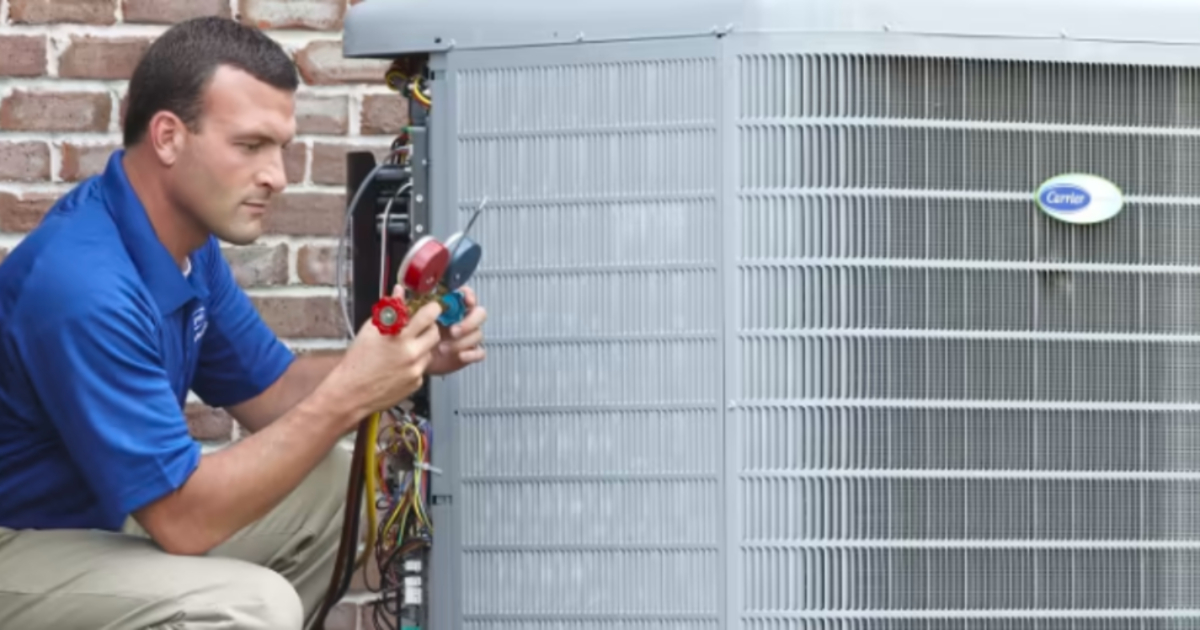
Frost on the outdoor coil and a cloud of steam every hour or so are normal behaviour for heat pumps in cold weather, not faults. Pulling heat from air near freezing chills the coil below the dew point, moisture freezes onto it, and the unit periodically reverses for a few minutes to melt it off. During that defrost the indoor fan may pause or the backup strips may run, which is the brief cool draft some homeowners notice. It is designed in.
What is not normal is a coil encased in solid ice for hours, an outdoor unit sitting in a snowdrift with no airflow, or a system that never comes out of defrost. Those are service calls, and the free checks before you make one are on our heat pump not working page. Keeping the outdoor unit clear of snow and off the ground on a stand is the one cold-weather task that is genuinely yours.
Does Ontario pay for a cold climate heat pump?
Yes: the Home Renovation Savings Program, delivered by Save on Energy and Enbridge Gas, currently offers up to $7,500 CAD for a cold climate air source heat pump, on condition that the model is on Natural Resources Canada’s qualified products list. Table 4 gives the heat pump lines only; the full programme, the after-rebate arithmetic and typical install prices are on our cost to install a heat pump in Ontario page.
| Measure | Rebate | Condition |
|---|---|---|
| Cold climate air source heat pump | Up to $7,500 CAD | Model on the NRCan qualified products list |
| Ground source heat pump | Up to $12,000 CAD | Programme eligibility rules apply |
| Home energy assessment | $600 CAD back | Do this first; it produces the heat loss number Table 3 needs |
Table 4. Home Renovation Savings Program, amounts read from the programme page on September 3, 2026. Amounts and eligibility change; confirm on the programme site before you commit. The Canada Greener Homes Grant closed in February 2024 and is not available; its separate loan and the Oil to Heat Pump Affordability stream are different programmes.
Which electricity utility do you call in your city?
Once a heat pump is your main heat, your electricity price plan matters far more than it did with a gas furnace, and the plan is changed through your local distributor, not through the Ontario Energy Board. The rates themselves are provincial and reset every November 1, so they are kept on the running cost page rather than repeated here. The distributor is city-specific, and Table 5 is the list.
| Where you live | Electricity distributor to contact for a plan change |
|---|---|
| Mississauga, Brampton | Alectra Utilities |
| Caledon, Bolton | Hydro One |
| Milton | Milton Hydro |
| Georgetown | Halton Hills Hydro |
| Etobicoke | Toronto Hydro |
Table 5. Distributor by municipality as of September 3, 2026. A few streets on municipal boundaries are served by a neighbouring distributor; your bill names the right one.
Which setup fits your house?
Two questions, and it points at the backup arrangement that suits your home, using the same logic as Table 2.
STEP 1 OF 2
What heats your home today?
STEP 2 OF 2
Does the house have ductwork with supply vents in the rooms?
Dual fuel: a cold climate heat pump on your existing ducts, the furnace kept as backup.
This is the most common Peel Region arrangement. The heat pump carries the house on most winter days and the furnace takes over below the balance point set at commissioning. If your furnace is under about ten years old there is no reason to replace it; if the air conditioner is due, the heat pump replaces that instead.
Ductless cold climate heads for the rooms you use, with the boiler kept for the coldest nights.
A hydronic house does not need ducts added to get most of the benefit. One or two ductless cold climate units cover the living space and cool it in summer, while the boiler stays on its own thermostat as backup. Get the model’s capacity at minus 18 in writing; a wall unit that is right for August can be short for January.
A ducted cold climate heat pump with electric resistance backup, the largest bill change on this page.
Your backup is already the kind you have now, so nothing about the house gets less reliable. Every hour the heat pump runs at a COP above 1.0 is an hour you were paying full price for. Do the home energy assessment first so the unit is sized to the heat loss, not to the old furnace’s nameplate.
Ductless cold climate heads, room by room, with the baseboards left in place as backup.
Start with the rooms that run the most baseboard hours, usually the main living area. The baseboards stay wired and become the backup for the coldest nights, at no extra cost. This is the arrangement NRCan’s ductless study in Ottawa measured, and it is the one most electrically heated Ontario homes end up with.
A ducted cold climate heat pump, with the oil furnace kept through the first winter as backup.
Check the federal Oil to Heat Pump Affordability programme before you sign anything, because oil-heated homes have a stream of their own separate from the Ontario rebate. Leaving the oil furnace connected for one winter costs little and tells you how many hours the backup actually ran before you decide whether to remove it.
Ductless cold climate heads with the existing oil or propane system left as backup.
Without ducts, wall or floor units in the main rooms do most of the heating and all of the summer cooling. The oil or propane system stays for the few nights below the units’ rated minimum. Ask about the Oil to Heat Pump Affordability programme and the Ontario rebate in Table 4; some homes can use both.
Rebate eligibility is decided by the programme, not by us. The right size for your house comes from a heat loss calculation, not from this finder.
How we know this
The two COP figures come from Natural Resources Canada’s published heating season assessment of one cold climate air source heat pump at the Canadian Centre for Housing Technology in Ottawa, and the minimum operating range and Canadian HSPF floor come from NRCan’s heat pump guide, both read September 3, 2026. The minus 18 design temperature is the Toronto area value in MMAH Supplementary Standard SB-1, which Ontario Building Code Sentence 9.33.3.2 requires designers to use. Rebate amounts were read from the Home Renovation Savings Program page the same day. The distributor list and the backup arrangements in Table 2 come from what our technicians install across Peel Region. There is no first-party survey behind this page and no performance percentage for heat pumps in cold weather is quoted for any brand, because a percentage belongs to a specific model’s own capacity table and nowhere else.
From our workshop and our vans
Company and furnace service footage from our own channel. None of these shows a heat pump in the cold, so treat them as background on who does the work rather than as evidence for the numbers above.
Get the capacity table for your house, not a brochure
A free in-home estimate from us includes the heat loss number, the exact model’s capacity at minus 18, and the balance point we would set, in writing. If a heat pump is not the right answer for your house, for instance a leaky envelope that the assessment rebate should fix first, we will say so. Our heat pump installation page covers what an install involves.
Aire One Peel Heating & Cooling, 1625 Courtneypark Dr E, Mississauga, ON L5T 1V9 · Existing heat pump acting up in the cold? Start with heat pump repair.
Frequently asked questions
Do heat pumps work in cold weather?
Yes, if the unit is a cold climate model. Natural Resources Canada measured a cold climate air source heat pump in Ottawa delivering heat at a COP of 1.5 at minus 21.1 degrees Celsius, meaning it still produced one and a half units of heat per unit of electricity. Conventional heat pumps built for milder climates lose capacity much earlier, which is where the old reputation comes from.
At what temperature does a heat pump stop working?
Each model has a rated minimum operating temperature, and NRCan puts that between minus 15 and minus 25 degrees Celsius for newer units. Below its rated minimum the unit shuts down or its output falls short, and the backup carries the house. It is a design line on the spec sheet, not a surprise, so ask for it for the exact model number before you sign.
Do heat pumps work at minus 20 in Ontario?
A cold climate heat pump does. The Toronto area, including Mississauga and Brampton, is designed to minus 18 under MMAH Supplementary Standard SB-1, and a unit rated to minus 25 has margin past that. NRCan’s Ottawa field data at minus 21.1 showed the house holding comfort with the heat pump still doing most of the work. Below the rated minimum, backup heat takes over as intended.
Is a heat pump worth it in Ontario winters?
Physically, yes: cold climate heat pumps in cold weather cover a Peel Region winter with a backup for the few nights below its rated minimum. Financially, the answer depends on whether your backup is gas or electric and which electricity plan you are on, which is a separate calculation. The Home Renovation Savings Program currently offers up to $7,500 CAD toward a qualifying cold climate unit, which changes that calculation for most homes.
Why is my heat pump blowing steam or icing up in winter?
Frost on the outdoor coil and periodic clouds of steam are normal defrost cycles. The coil runs colder than the outdoor air, moisture freezes onto it, and the unit reverses for a few minutes to melt it off. A coil sealed in solid ice for hours, a unit buried in snow, or a system that never leaves defrost is different, and those are the cases worth a service call.
Do I still need a furnace with a heat pump in Ontario?
You need a backup heat source, and a furnace is one of the two common choices. In a dual fuel system the existing gas furnace stays and takes over below a set outdoor temperature. In an all-electric system, resistance strips in the air handler do the same job. Either way the backup is part of the design, and a quote that has no backup at all is incomplete for a Peel Region home.
Final verdict
Heat pumps in cold weather are a settled question for the cold climate type: the Toronto area is designed to minus 18, NRCan measured a unit still delivering a COP of 1.5 at minus 21, and the units on the market are rated to minus 25. The remaining decision is the backup, gas or electric, and that is a question about your house and your bill, not about whether the technology works.
Where we are not the best answer: if your home is on a thin-insulation, draughty envelope, the assessment rebate and the insulation lines on the same programme will do more for January than any equipment change, and an insulation contractor is who you need first. We would rather tell you that than size a heat pump to a house that leaks.
Sources and references
- Cooling and Heating Season Performance Assessment of a Cold Climate Air Source Heat Pump at the Canadian Centre for Housing Technology, Natural Resources Canada, September 2013. COP figures in Table 1.
- Heating and Cooling With a Heat Pump, Natural Resources Canada. Minimum operating temperature range and Canadian HSPF floor, read September 3, 2026.
- Ontario Building Code, O. Reg. 332/12, Sentence 9.33.3.2, outdoor design temperatures, referencing MMAH Supplementary Standard SB-1, Climatic and Seismic Data.
- Home Renovation Savings Program, Save on Energy and Enbridge Gas. Table 4 amounts read September 3, 2026.
- O. Reg. 463/10, Ozone Depleting Substances and Other Halocarbons, Government of Ontario. Refrigerant handling requirements.
- Technical Standards and Safety Authority, the Ontario authority for fuels safety and gas technician certification.
What we updated
September 3, 2026. Rebuilt from a 2023 post that said heat pumps “work even in sub-zero conditions” without a source. Replaced that with Natural Resources Canada’s measured field data, added the Toronto area design temperature from SB-1, five tables, the backup and spec sheet sections, the distributor list, the decision finder and the safety callout. Removed unsourced efficiency claims and a broken reference to “RASs”.
Related reading
- Heat pump vs furnace running cost in Ontario, the dollars behind the physics on this page.
- Cost to install a heat pump in Ontario, install prices and the after-rebate arithmetic.
- Heat pump warranty in Ontario, what registration and the first 90 days decide.
- Lower your heating bill in Ontario, the envelope work that comes before any equipment.
Mario Vaghei
General Manager, Aire One Peel Heating & Cooling
Mario pulled the two COP figures on this page from the NRCan field study itself rather than from any summary of it, and chose to publish no brand performance percentage because none could be tied to a public capacity table. He is General Manager, not a licensed trade, so the refrigerant, electrical and gas guidance here stops where a certified technician’s work begins.