





By Mario Vaghei, General Manager, Aire One Peel Heating & Cooling · Published June 12, 2024 · Facts verified August 26, 2026
Almost every warranty argument we walk into comes down to the same misunderstanding: the homeowner thinks they have one warranty, and they actually have two, from two different companies, covering two different things. The manufacturer covers the part. The contractor covers the time. Nobody covers the refrigerant. This guide sets out exactly what Carrier Canada publishes, what the installing contractor is responsible for, and the rights Ontario law gives you on top of both. If your system is already down, start with air conditioner repair.
In this guide
The two warranties · What Carrier actually publishes · The 90-day registration rule · What is covered · What is not, including refrigerant · What voids a warranty · Your Ontario rights on top · Protection plans · Making a claim · Coverage checker · FAQ · Final verdict · Sources
Short answer
A central air conditioner in Ontario carries two separate warranties: the manufacturer covers defective functional parts such as the compressor, coil and control board, while the installing contractor covers the labour to fit them for a term the contractor sets, and refrigerant is excluded from both by name.
On Carrier equipment the coverage term is decided in the first 90 days: register on time and the parts warranty runs ten years, miss the window and it runs five.
Key takeaways
- Carrier's Canadian pages state the parts term is "5 years if not registered within 90 days" of installation.
- Carrier answers the labour question directly: "Labor is provided by the dealer/contractor for a period of time as determined by them."
- Refrigerant is named as an excluded part on Carrier's own FAQ, alongside belts, fuses and gaskets. A covered coil leak still produces an invoice.
- Only a technician holding an Ozone Depletion Prevention card may legally handle refrigerant in Ontario, so a homeowner cannot top it up themselves.
- Ontario gives you a 10 calendar day cooling-off period on a contract signed in your home, and air conditioners are on the restricted list that generally cannot be sold door to door at all.
Why you have two warranties, not one
The manufacturer warrants the equipment it built; the contractor warrants the work they did. These are separate promises from separate companies with separate terms, and neither one covers the other's job. Carrier states the split in plain words on its own Canadian FAQ: "Carrier is the manufacturer of heating, air conditioning and ventilation equipment and provides a limited parts warranty. Labor is provided by the dealer/contractor for a period of time as determined by them."
A protection plan is a third, optional thing. It is not a warranty at all; it is a service subscription that can absorb the costs the two warranties leave behind, most often the labour and the diagnostic fee.
| Question | Manufacturer parts warranty | Contractor labour warranty | Protection plan |
|---|---|---|---|
| Who promises it | The equipment maker, for example Carrier | The company that installed it | A contractor, on a monthly subscription |
| How long | Set by the certificate and by registration, see below | Set by the contractor. Ask for ours in writing, on the quote | As long as you subscribe |
| Defective compressor, coil or control board | The part is supplied | The hours to fit it are covered during the term | Parts and labour up to the yearly plan limit |
| Refrigerant, recovery and recharge | Excluded by name | Depends on the contractor | Ask before signing. Refrigerant cover is set in the plan agreement, not by the manufacturer |
| Annual maintenance | Not covered, and skipping it can cost you a claim | Not covered | Included on every tier |
| Damage from a storm, a flood or neglect | Not covered | Not covered | Not covered. This is a home insurance question |
What does Carrier Canada actually publish?
We install Carrier, so these are the terms we can quote from the manufacturer's own Canadian pages rather than from a summary of them. The table below reproduces the wording verbatim, because warranty writing is one of the few places where paraphrasing changes the meaning. Note that Carrier writes "labor" in the American spelling; those are quotations, not our house style.
| Where it comes from | What it says |
|---|---|
| Evaporator coil, CVAM | "10-year parts limited warranty upon timely registration." Footnote: "To the original owner, when product is used in an owner-occupied residence... Warranty period is 5 years if not registered within 90 days." |
| Air conditioner, 26TPA8 | "Upon timely registration, on eligible equipment select either a 10-year parts only limited warranty or a 5-year parts, plus a 3-year labor limited warranty." |
| The labour option, same footnote | "available only if the installing dealer/contractor has elected to participate in the Consumer Choice warranty program" |
| Heat pump, 27VNA1 | "10-year unit replacement limited warranty for compressor failures only, to original purchaser with timely registration, except where restricted by jurisdiction." |
| Homeowner FAQ, on labour | "Labor is provided by the dealer/contractor for a period of time as determined by them." |
| Homeowner FAQ, on what is a part | "The warranty only covers functional parts such as: blower motor, compressor, coil, control board, heat exchanger, etc." |
One thing we will not tell you, because Carrier does not say it. The same footnotes add that "Jurisdictions where warranty benefits cannot be conditioned on registration will automatically receive a 10-year parts limited warranty." Carrier does not name those jurisdictions, and we could not find a regulator source confirming whether Ontario is one. Treat the 90-day deadline as real and register on time. Anyone telling you Ontario is exempt should be asked to show you where that is written.
The 90-day registration rule, and why it halves your coverage
Registration is a five minute job that is worth five years of coverage, and it is the single most common thing homeowners discover too late. Carrier's Canadian product footnotes are unambiguous: the parts warranty runs ten years on timely registration, and "Warranty period is 5 years if not registered within 90 days" of installation. Coverage is stated to the original owner, and on the coil page, when the product is used in an owner-occupied residence.
- Find the serial number. It is on the rating plate sticker on the outdoor unit and on the indoor coil cabinet. Photograph it; you will need it again.
- Register within 90 days of installation on Carrier's product registration portal. The deadline is published on the product page and on your warranty certificate, not on the registration site itself, which is why it is so easy to miss.
- Check what actually got recorded. Carrier's warranty lookup takes the serial number and returns your coverage. Its own disclaimer notes it shows general parts warranties only, so keep the certificate.
- Ask your installer, in writing, who registered it and when. Keep that confirmation with your paperwork, because it is what settles the term later.
If you are past 90 days there is no fix, and no honest contractor can create one. What you can still do is confirm what term you actually have, so a future repair decision is made on facts rather than assumptions. Call us with the serial number and we will look it up with you.
What is covered by an air conditioner parts warranty?
Functional parts that fail because of a defect in materials or workmanship, and nothing else. Carrier lists them: "blower motor, compressor, coil, control board, heat exchanger, etc." The compressor and the coils are the expensive ones, which is why they dominate every warranty conversation. On select premium models Carrier goes further and offers a unit replacement rather than a part, but only for compressor failures and only with timely registration.
The word doing the work in every certificate is defect. A capacitor that fails at year three because it was manufactured badly is a covered defect. The same capacitor failing at year twelve because it reached the end of its life is wear, and wear is excluded. Two identical symptoms, two different answers, and the technician's diagnosis is what separates them. That is a reason to want the diagnosis in writing.
What is not covered, and why refrigerant is the one that surprises people
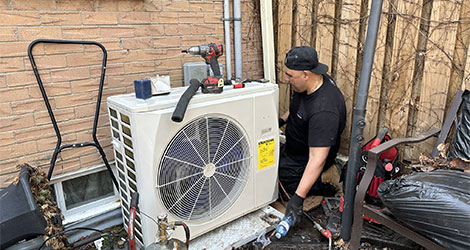
Refrigerant is excluded by name. Carrier's homeowner FAQ lists it among the non-functional parts outside the warranty, alongside belts, pulleys, brackets, fuses, gaskets, paint, screws, nuts and bolts, and adds rust, corrosion and normal wear and tear to the exclusions. This is the mechanism behind the most common complaint we hear: the coil leak was covered, and the invoice still ran into the hundreds.
| Part of the job | Who pays | Why |
|---|---|---|
| The replacement coil | Manufacturer | A coil is a functional part and a leak from a defect is a covered failure |
| Diagnosis and the trip to your home | You, unless a labour warranty or plan applies | The manufacturer warrants the part, not the visit |
| Hours to remove, braze, vacuum and test | You, unless a labour warranty or plan applies | "Labor is provided by the dealer/contractor for a period of time as determined by them" |
| The refrigerant that escaped | You | Named as an excluded part on Carrier's FAQ |
| Recovery and disposal of the old charge | You | Regulated work; only a technician holding an Ozone Depletion Prevention card may do it |
Do not let anyone top up your refrigerant informally. Under Ontario Regulation 463/10, Ozone Depleting Substances and Other Halocarbons, a certified technician is the only person who can remove, discharge, handle and dispose of refrigerant. The credential is an Ozone Depletion Prevention card, valid for five years. Work done by an uncertified person is illegal, and it hands the manufacturer a clean reason to refuse a future claim.
If your system shares ductwork with a gas furnace, the Technical Standards and Safety Authority states that under Ontario law furnaces and fuels-fired appliances must be maintained by TSSA-registered contractors, who are required to employ TSSA-certified gas technicians. That applies to the heating side of the system, not to a straight electric air conditioner.
What voids an air conditioner warranty in Ontario?
Nothing voids a warranty by accident, but several things give the manufacturer a defensible reason to decline a specific claim. The pattern is consistent: anything that makes the failure attributable to something other than a manufacturing defect.
- Improper installation. A coil that fails because the system was never charged correctly is an installation fault, not a defect. This is why the installing contractor matters as much as the badge on the box.
- No maintenance history. Carrier lists rust, corrosion and normal wear as exclusions. A neglected coil produces exactly those, and without service invoices you have no way to argue otherwise.
- Uncertified work on the refrigerant circuit, or unregistered work on the gas side. Both are also against Ontario law, as above.
- Storms, floods and physical damage. Not a defect, and not a warranty matter. Check your home insurance policy instead.
- Change of ownership. Carrier states coverage to the original owner, and on coils, in an owner-occupied residence. If you bought the house with the system in it, verify what remains rather than assuming the full term carried over.
What Ontario law gives you on top of any warranty
This is the part almost no warranty guide covers, because most of them are written nationally or in the United States. Ontario has consumer protection rules that apply to how the equipment was sold to you, entirely separately from what the manufacturer promises about the equipment itself. On door-to-door sales they are unusually strong, and air conditioners are named specifically.
| Your right | What Ontario publishes |
|---|---|
| Cooling-off period | "you have the right to a 10 calendar-day cooling-off period. You may cancel this contract for any reason and without having to pay any cancellation fees within these 10 days" |
| Air conditioners cannot be sold at your door | Air conditioners, furnaces, water heaters, air cleaners, air purifiers, water treatment devices and duct cleaning services are on the restricted list, unless you contacted the business first and invited them |
| A written contract | "any home renovation contract worth more than $50 must be in writing" |
| The estimate holds | "the final price for all goods and services cannot be more than 10% over the original estimate unless you have agreed to new work or a new price" |
| Refunds after cancelling | "For most contracts, the company has 15 days to return your money" |
Ontario's own renovations guidance also puts warranties in their place, and we would rather quote it than argue with it: "check warranties and guarantees carefully. But remember that the contractor's reputation and length of time in business are more important than a warranty or guarantee." A long paper warranty from a company that will not answer the phone in year six is worth less than a shorter one from a company that will.
One deliberate omission: you will see pages claiming Ontario law gives you implied warranty rights that override the manufacturer's terms. That may well be so, but we could not read the statute directly from a government source to quote it, and Ontario currently has two Consumer Protection Acts in circulation. We would rather leave a gap than print a legal claim we cannot source.
Do protection plans fill the gap?
They fill the labour gap, which is the gap that costs money. Once the contractor's labour warranty expires, every covered part still arrives with a bill for the hours to fit it, and a plan converts that unpredictable bill into a fixed monthly cost. Our current tiers are below, taken from our own plans page rather than from memory.
| Tier | Heating and cooling combined | Parts and labour limit |
|---|---|---|
| Bronze | $19.99 CAD a month | Maintenance tier, no parts and labour limit |
| Silver | $42.99 CAD a month | Heating tier covers all parts and labour up to $750 CAD on furnace repairs a year, no deductible |
| Gold | $46.99 CAD a month | Combined tier covers all parts and labour up to $1,500 CAD on furnace and air conditioner repairs a year, no deductible |
Where a plan is not worth it, honestly. On a system still inside both its parts warranty and the installer's labour warranty, a plan is largely paying for maintenance you could book directly. The arithmetic changes the moment the labour warranty ends, because that is when a covered part starts costing you hours. Compare the yearly limit against what a coil or compressor job actually takes. Full details are on our protection plans page, and if you would rather just book a service visit, that is our air conditioner maintenance in Mississauga page.
How do you actually make a warranty claim?
You do not claim directly with the manufacturer; the dealer does it for you, which is why the relationship with the installing contractor is the practical warranty. Five things make the difference between a claim that goes through and one that stalls.
- The serial number, photographed off the rating plate before the unit is buried behind a snow guard or a hedge.
- Proof of registration, or a lookup result showing the term you actually have.
- Your service history, invoice by invoice. This is what answers a wear-versus-defect argument.
- A written diagnosis naming the failed part and the cause, not just the symptom.
- The quote split into part, labour and materials, so you can see exactly which line the warranty removes and which lines remain yours.
If the claim is declined and you disagree, ask for the reason in writing against the certificate wording. Most disputes we see resolve at that step, because the reason either matches a printed exclusion or it does not.
Coverage checker: who pays for this repair?
Three questions about the system in your home. It will tell you when the answer is that nobody covers it, because that is often the true answer.
How we know this
Every warranty term quoted here was read directly off Carrier Canada's own residential product and homeowner pages on August 26, 2026, and is reproduced verbatim rather than summarised. The refrigerant handling rule comes from the Government of Ontario, the fuels contractor rule from the Technical Standards and Safety Authority, and the consumer rules from ontario.ca guidance pages updated in June and August 2026. Protection plan prices and limits were read off our own plans page the same day.
Two things are deliberately absent. We do not state whether Ontario is a jurisdiction where warranty benefits cannot be conditioned on registration, because Carrier does not name those jurisdictions and no regulator source confirmed it. We do not make any implied-warranty claim, because the statute could not be read directly. Where we could not source it, we left it out rather than rounding it up.
Watch: the company behind the labour warranty
A labour warranty is only as good as the company standing behind it. Nothing loads from YouTube until you press play.


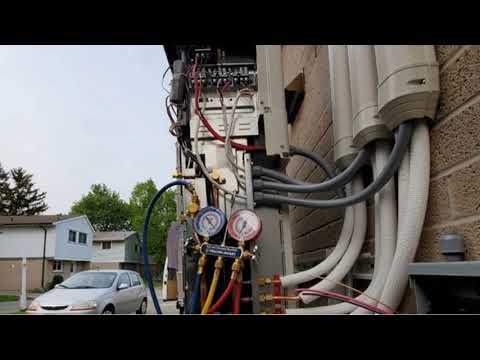
Who we are and the seven cities we cover, from the Courtneypark Drive East branch.
Not sure what your warranty actually says?
Send us the serial number off the rating plate and we will look up the term with you, whoever installed it. If it turns out you are covered, we will tell you that too. Aire One Peel Heating & Cooling, Carrier Factory Authorized Dealer, 1625 Courtneypark Dr E, Mississauga, ON L5T 1V9. Serving Mississauga, Brampton, Caledon, Bolton, Georgetown, Etobicoke and Milton.
Frequently asked questions
How long is a typical air conditioner warranty in Ontario?
It depends on registration more than on the brand. Carrier's Canadian product pages state a ten year parts limited warranty upon timely registration, and that the "Warranty period is 5 years if not registered within 90 days" of installation. The contractor's labour warranty is separate and shorter, set by each contractor rather than by the manufacturer.
Does an air conditioner warranty cover labour?
The manufacturer's warranty generally does not. Carrier answers this directly: "Carrier is the manufacturer of heating, air conditioning and ventilation equipment and provides a limited parts warranty. Labor is provided by the dealer/contractor for a period of time as determined by them." Labour comes from your installer's own warranty or from a protection plan.
Is an evaporator coil leak covered under warranty?
The coil itself normally is, as a functional part failing inside the parts term. The labour to remove, braze, vacuum and test is usually billed, and the refrigerant is excluded by name. That combination is why a covered coil leak still arrives with an invoice unless you hold a labour warranty or a protection plan.
Does an air conditioner warranty cover refrigerant?
No. Carrier's homeowner FAQ names refrigerant among the non-functional parts outside the warranty, alongside belts, fuses and gaskets. In Ontario only a technician holding an Ozone Depletion Prevention card may legally handle it, so the recovery and recharge are regulated labour that is billed separately.
Do I have to register my air conditioner to get the warranty?
To get the longer term, yes. Carrier's Canadian pages state the parts warranty is five years if the equipment is not registered within ninety days of installation, and ten years with timely registration. Coverage is stated to the original owner, and on coils, in an owner-occupied residence. Ask your installer in writing who registered it.
What voids an air conditioner warranty?
Nothing voids it by accident, but improper installation, no maintenance history, uncertified work on the refrigerant circuit, and storm or flood damage all give a manufacturer grounds to decline a specific claim. Carrier also lists rust, corrosion and normal wear and tear as exclusions, which is what a neglected system produces.
Is an air conditioner warranty transferable when I sell my house?
Carrier states its coverage to the original owner, and on coil pages, when the product is used in an owner-occupied residence. Other manufacturers vary. If you are buying a home with a system already in it, look the serial number up rather than assuming the remaining term carried over with the house.
How long do parts warranties last compared with labour warranties in Ontario?
They run on different clocks. Manufacturer parts coverage on a registered central air conditioner is commonly 10 years, and 5 years if the unit is never registered. Labour is not part of the manufacturer warranty at all: it comes from the installing contractor, and typical dealer labour coverage is 1 to 2 years, with longer terms only when you buy an extended labour plan. So a 10-year warranty usually means 10 years of parts and one or two years of labour, which is why a repair in year 5 can still cost several hundred dollars even when the part itself is free.
Does a lifetime parts warranty include labour?
No. A lifetime or limited-lifetime parts warranty, usually on the compressor for the original registered owner, covers the replacement part only. Labour, refrigerant, diagnostics and trip charges are billed unless a separate labour warranty or protection plan is in place. Read the certificate for the words “parts only,” and ask your installer in writing how many years of labour coverage come with the installation.
Final verdict
Do two things and you have handled ninety per cent of the warranty risk on a new air conditioner. Register it inside ninety days, because that one action is worth five extra years of parts coverage. Then keep every service invoice, because the maintenance record is what answers the only argument a manufacturer can really make against you, which is that the failure was wear rather than a defect.
After that, be realistic about what a warranty is. It covers the part, not the visit, and never the refrigerant. The gap it leaves is labour, and labour is what a protection plan or a longer installer warranty is actually for. If you want to know what you have today, send us the serial number and we will read the term back to you, whoever installed it. Call 905-564-8545 or ask us to check your coverage.
Sources and references
- Carrier Canada, homeowner FAQs, on limited parts coverage, labour and excluded parts: carrier.com
- Carrier Canada, CVAM evaporator coil, ten year parts upon timely registration and the ninety day rule: carrier.com
- Carrier Canada, 26TPA8 air conditioner, the Consumer Choice two option warranty: carrier.com
- Carrier Canada, 27VNA1 heat pump, unit replacement warranty for compressor failures only: carrier.com
- Carrier Canada, warranty hub, registration and lookup: carrier.com
- Carrier Canada, warranty lookup by serial number: carrier.com
- Carrier product registration portal: productregistration.carrier.com
- Government of Ontario, certificate to handle refrigerants, O. Reg. 463/10, updated April 7, 2026: ontario.ca
- Technical Standards and Safety Authority, hire registered and certified professionals: tssa.org
- Government of Ontario, door to door sales and home service contracts, updated June 19, 2026: ontario.ca
- Government of Ontario, your rights when starting home renovations or repairs, updated August 6, 2026: ontario.ca
- Competition Bureau Canada, warranties and guarantees under the Competition Act: competition-bureau.canada.ca
Related reading
- AC repair or replacement: how to decide
- Air conditioner installation cost in Mississauga
- When should I replace my air conditioner?
- Protection plans
- HVAC labour warranty in Ontario
- Heat pump warranty in Ontario
- Furnace warranty in Ontario
- Navien tankless water heater warranty
What we updated, August 26, 2026
- Replaced generalised warranty ranges with the terms Carrier Canada actually publishes, quoted verbatim, including the ninety day registration rule.
- Added the refrigerant exclusion, sourced to Carrier's own list of non-functional parts.
- Added an Ontario consumer rights section covering the ten day cooling-off period and the restricted goods rule that names air conditioners.
- Added the Ontario refrigerant handling requirement and the TSSA fuels contractor rule.
- Corrected the protection plan tiers and limits against the live plans page.
- Added a named author, five tables, a coverage checker, a video module and a full schema graph.
- Removed a reviewer credit that named no person, and removed four links to pages that do not exist.
Mario Vaghei
General Manager, Aire One Peel Heating & Cooling
Mario rebuilt this guide from the warranty arguments our technicians are asked to settle on site, and had every term on it read back to Carrier Canada's own pages before it was printed. General Manager is a business role, not a trade credential: the refrigerant and gas work described here is performed by certified technicians.