


24/7 Emergency, No After-Hours Charge
Carrier Factory Authorized Dealer
BBB Accredited Business
Free In-Home Estimates
Financing and Rent-to-Own

By Mario Vaghei, General Manager, Aire One Peel Heating & Cooling · Published July 24, 2024 · Facts verified August 31, 2026
An air conditioner making noise rarely proves what is wrong from the sound alone, but it does tell you how urgently to act. Some noises mean keep an eye on it, one means switch the system off before you finish reading, and two of them put you into territory where Ontario law limits who may legally touch the equipment. This guide gives the eight sounds we hear most, the safe checks you can do yourself, and the point where air conditioner repair stops being optional.
In this guide
The eight sounds ·
When to switch it off ·
Eight safe checks ·
Hissing and the refrigerant rule ·
Electrical buzzing ·
Indoor or outdoor ·
Who is allowed to fix it ·
FAQ ·
Final verdict
Short answer
Switch the system off at the thermostat and the breaker if you hear grinding, banging, or a burning smell with the noise. Screeching, buzzing and hissing need service soon but not panic. Rattling, clicking at startup and mild humming are usually minor. A sound never proves the cause on its own.
Match yours in the table below, then run the eight safe checks.
Key takeaways
- Grinding and banging are the two sounds that justify shutting the system down immediately. Most others do not.
- A hiss or bubble may be refrigerant. In Ontario that is regulated: only a certified person may service equipment containing refrigerant.
- In most Ontario homes the air conditioner borrows the furnace blower and ductwork, so an indoor summer noise is often a furnace part.
- Record the sound, when it happens, and whether cooling changed. That shortens the diagnosis more than guessing the cause.
Air conditioner making noise: what each sound means
An air conditioner making noise points to a different family of causes depending on the sound, and the useful question is not what is broken but how fast you need to act. The table below pairs the eight sounds we hear most with their usual causes and an urgency level. Treat the cause column as the likeliest explanation, not a diagnosis.
| Sound | Usual causes | Urgency |
|---|---|---|
| Grinding | Failing motor bearings, or metal contacting metal | Switch off now |
| Banging or clanking | A loose or broken part inside the fan or compressor housing | Switch off now |
| Screeching or squealing | Dry fan motor bearings, or a worn belt on older indoor units | Service soon |
| Buzzing | Electrical: a failing capacitor, contactor or loose connection | Service soon |
| Hissing or bubbling | Possible refrigerant leak, or a duct leak under pressure | Service soon, and see the refrigerant rule |
| Rattling or vibrating | Debris in the outdoor unit, a loose panel, or an unlevel pad | Often a homeowner fix |
| Clicking | Normal at startup and shutdown. Constant clicking suggests a relay | Monitor, unless constant |
| Whistling | Restricted airflow: a clogged filter, or closed and blocked registers | Often a homeowner fix |
| Sound | What a technician measures | What it rules out |
|---|---|---|
| Buzzing | Capacitor microfarad rating against the nameplate, contactor operation, voltage at the disconnect | A capacitor within tolerance means the buzz is not the usual suspect |
| Hissing or bubbling | Suction and head pressures, superheat and subcooling, then an electronic leak search | Correct pressures point at ducts rather than refrigerant |
| Screeching | Motor amp draw against the nameplate, bearing play by hand with power isolated | Normal amps and no play move the suspicion to the blower side |
| Whistling | Static pressure across the filter and coil, and airflow at the registers | Normal static pressure means the restriction is elsewhere |
Should I turn off my AC if it is making noise?
Turn the air conditioner off immediately if you hear grinding or banging, or if any noise comes with a burning smell, smoke, visible scorching, or a breaker that keeps tripping. Those combinations risk turning a repair into a replacement, or worse. For screeching, buzzing, hissing, rattling and whistling, it is safe to keep the system off at the thermostat and book service rather than shutting the breaker.
Stop and switch off at the breaker if you notice any of these:
- A burning or electrical smell, smoke, or scorch marks at the outdoor disconnect or panel
- Grinding or banging that continues after startup
- A breaker that trips again after you reset it once. Do not keep resetting it
- Any shock, tingle, or visible damage to wiring or the disconnect box
If you smell gas rather than burning, leave the building first and call Enbridge Gas from outside. Gas has nothing to do with cooling, but the indoor equipment often sits on the furnace.
Eight safe checks you can do yourself
Eight checks are safe for a homeowner, cost nothing, and either solve the noise or make the technician’s visit shorter. None of them involves removing a panel, touching wiring, or reaching into equipment. Do them with the system off at the thermostat.
| Check | What you are looking for |
|---|---|
| 1. Filter | A clogged filter causes whistling and strains the blower. Replace it before anything else. |
| 2. Registers | Open every supply and return register. Closed ones raise duct pressure and whistle. |
| 3. Around the outdoor unit | Branches, leaves, garden tools or furniture touching the cabinet. A classic rattle. |
| 4. The pad | Is the outdoor unit sitting level? A settled pad transmits vibration into the house. |
| 5. Where the sound is | Indoors, outdoors, or in one room only. This decides which component is suspect. |
| 6. When it happens | Startup, steady running, or shutdown. Startup-only noises are often normal. |
| 7. Has cooling changed? | A noise plus weaker cooling is a different problem from a noise alone, and our AC not cooling guide covers that combination. |
| 8. Record it | A phone recording from a safe distance. Intermittent noises rarely repeat for the technician. |
Hissing or bubbling: the Ontario refrigerant rule
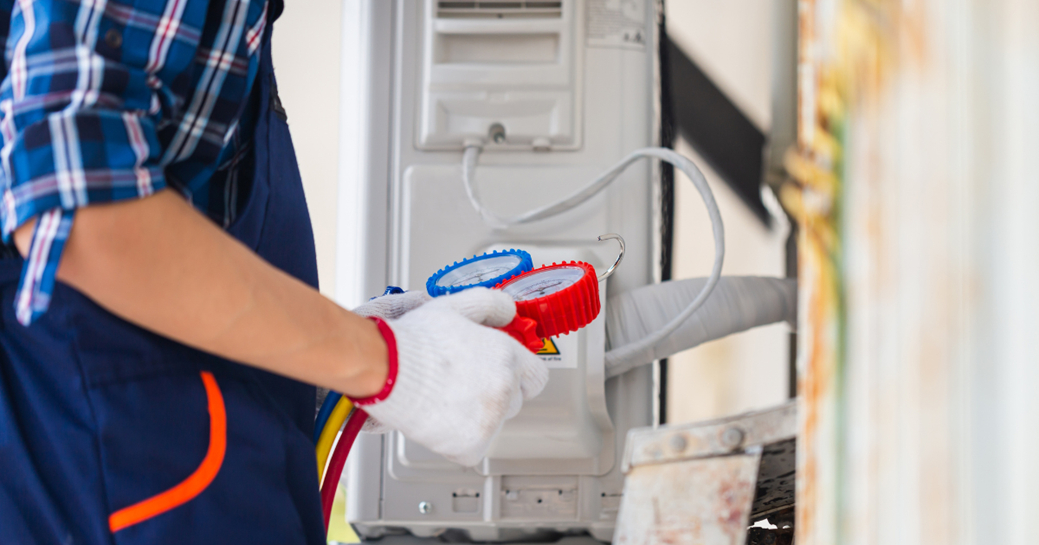
A hiss or a bubbling sound can indicate a refrigerant leak, and in Ontario that changes what you are allowed to do about it. Under O. Reg. 463/10, Ozone Depleting Substances and Other Halocarbons, section 22 states that no person shall service or test refrigeration equipment that contains a refrigerant unless the person is certified under section 34. Section 19(1) prohibits any person from discharging, or permitting the discharge of, refrigerant into the natural environment or within a building.
The practical reading is the part competitors leave out. Continuing to run a system you believe is leaking is not just bad for the equipment, it risks permitting a discharge the regulation prohibits. Topping up refrigerant without finding the leak is not a repair either, because the charge simply escapes again. If you suspect a leak, switch the system off and book a certified technician who will find the leak first.
There is an honest caveat: not every hiss is refrigerant. A duct leak under pressure hisses too, and so does air rushing past a badly fitting filter. That is exactly why the sound alone does not settle it and a pressure test does.
What makes an air conditioner buzz, and who fixes it?
A buzz from an air conditioner is almost always electrical, most often a failing capacitor, a contactor that is not pulling in cleanly, or a loose connection. It is the sound most likely to be dismissed as normal and it should not be, because a capacitor that fails completely will usually take the compressor start with it.
Where the buzz sits decides who you call. Buzzing inside the equipment is HVAC work. Buzzing at the panel, the disconnect box, or a wall switch is electrical work, and the Electrical Safety Authority is explicit that Licensed Electrical Contractors are the only businesses in Ontario legally authorized to do electrical work in your home. Ask any contractor for their seven digit ECRA/ESA licence number before electrical work starts.
Is the noise from the indoor unit or the outdoor unit?
Locating the noise matters more than describing it, because in most Ontario homes the air conditioner does not have its own indoor unit at all. It shares the furnace’s blower motor and the same ductwork. That means a summer noise coming from the basement is frequently a furnace component doing cooling-season work, which changes both the diagnosis and who should attend.
| Where you hear it | Likely component | Who attends |
|---|---|---|
| Outside, at the condenser | Compressor, condenser fan, contactor, capacitor, cabinet panels | HVAC technician |
| Basement, at the furnace | Blower motor, blower wheel, evaporator coil housing | HVAC technician, and it may be a furnace part |
| In the ducts or one room | Restricted airflow, loose duct sections, expansion ticking | Often a homeowner fix first |
| At the panel or disconnect | Breaker, disconnect, or house wiring | Licensed Electrical Contractor |
If the sound turns out to be heating-side, our companion guide on why a furnace makes noise covers those components properly rather than repeating them here. Routine upkeep that prevents several of these sounds is set out in what regular air conditioner maintenance includes.
Who is allowed to fix each of these in Ontario?
Three different rules apply depending on what the noise turns out to be, and only one of the three is open to a homeowner. Cleaning, clearing debris and changing filters are yours. Refrigerant work is restricted by regulation. Electrical work inside the house belongs to a Licensed Electrical Contractor.
This is also where we should say something against our own interest. Three of the eight sounds in the table above are usually fixed for free by a homeowner in ten minutes, and we would rather you did that than paid us a diagnostic fee to change your filter. The possible downside of calling us first is exactly that: if your noise was a branch against the condenser, you paid for a visit you did not need. Run the eight checks first. If the noise survives them, then a diagnosis earns its money, and that is when our AC repair team is worth calling.
Should you switch it off?
Two questions, same routing as the tables above.
The triage needs JavaScript; the sound table and safety callout above give the same answers.
How we know this
The regulatory statements are quoted from the sources named, read on August 31, 2026: O. Reg. 463/10 sections 19 and 22 on ontario.ca, and the Electrical Safety Authority on hiring a Licensed Electrical Contractor. The sound-to-cause mapping and the urgency column reflect how Aire One Peel’s service department routes an air conditioner making noise; we have not published counted first-party call data on this topic, so this page claims no percentages of its own. Urgency levels are routing guidance, not a diagnosis, and a sound heard over a phone or read in a table is never a substitute for a pressure test or an electrical check.
See who you would be calling
Three short videos from our own channel.
Video 1 of 3
Noise survived the eight checks?
That is when a diagnosis is worth paying for. 24/7 with no after-hours charge. Aire One Peel Heating & Cooling, TSSA-registered fuels contractor FS R0076624709, 1625 Courtneypark Dr E, Mississauga, ON L5T 1V9.
Frequently asked questions
Should I turn off my AC if it’s making noise?
Turn it off immediately for grinding or banging, or for any noise with a burning smell, smoke, scorching, or a repeatedly tripping breaker. For screeching, buzzing, hissing, rattling or whistling it is enough to stop the system at the thermostat and book service. Running a grinding compressor is what turns a repair into a replacement.
What to do if my AC is making noise?
Note the sound, where you hear it, when it happens, and whether cooling has changed, then run the eight safe checks: filter, registers, debris around the outdoor unit, and the level of the pad. Record the noise on your phone from a safe distance. Do not remove panels or touch wiring. If it survives those checks, book a diagnosis.
Why is my AC making a weird noise?
Most weird noises come from one of four families: something loose or contacting metal, a motor bearing wearing out, an electrical part failing, or restricted airflow. The sound narrows the family but does not confirm the cause, which is why a technician measures pressures and electrical values rather than diagnosing by ear.
Why is my AC unit outside making a loud noise?
The outdoor unit holds the compressor, the condenser fan, the contactor and the capacitor, so it produces the loudest failures. Buzzing usually means an electrical part, screeching means fan bearings, and rattling is often just debris or a loose panel. Clear anything touching the cabinet first, because that costs nothing to rule out.
What does a bad AC fan motor sound like?
A failing fan motor usually screeches or squeals as the bearings dry out, then progresses to a grinding or rumbling sound as they wear. It often changes with fan speed and may be loudest at startup. Once it grinds, stop running the system, because a seized motor can damage surrounding components.
What does a bad AC compressor sound like outside?
A struggling compressor typically hums loudly without starting, buzzes for a moment then stops, or produces a hard clunk at shutdown. A loud hum that does not turn into normal running often points at the start capacitor rather than the compressor itself, which is a far cheaper part, so it is worth diagnosing before assuming the worst.
How to make AC stop buzzing?
There is no safe homeowner fix for an electrical buzz, because the usual causes are a capacitor, a contactor or a loose connection inside a live cabinet. What you can safely do is confirm the buzz is at the equipment rather than the panel, then book service. If it is at the panel or disconnect, that is work for a Licensed Electrical Contractor.
Final verdict
An air conditioner making noise needs one decision from you today, and sorting the sound into one of three buckets makes it. Grinding, banging, or anything with burning or smoke means switch off now. Hissing, buzzing and screeching mean book service this week and stop running the system if you suspect refrigerant. Rattling, whistling and startup clicking mean try the free fixes first, because three of the eight sounds on this page are solved by a filter, an open register, or moving a branch.
What we updated
August 31, 2026: full rebuild of the July 2024 article. The original avoided mapping an air conditioner making noise to any cause; this version provides that mapping with an explicit urgency column and states plainly that a sound is not a diagnosis. Added the O. Reg. 463/10 refrigerant rule, the ESA electrical boundary, the indoor and outdoor component table, eight safe checks, a triage quiz, and seven FAQs. The internal link to air conditioner repair now points at the live URL instead of a redirect.
Sources and references
- O. Reg. 463/10, Ozone Depleting Substances and Other Halocarbons: section 19 discharge prohibition, section 22 certification requirement
- Electrical Safety Authority, hiring a Licensed Electrical Contractor in Ontario
- Technical Standards and Safety Authority, registered contractors and certified technicians
- Natural Resources Canada, keeping filters, coils and ductwork clear
Mario Vaghei
General Manager, Aire One Peel Heating & Cooling
Mario rebuilt this guide so it answers the question homeowners actually ask, which sound means stop, while keeping the original’s point that a noise is not a diagnosis. He checked the refrigerant and electrical rules against O. Reg. 463/10 and the Electrical Safety Authority on August 31, 2026.