


AC maintenance · Peel Region, Ontario · Updated September 2026
Get Your AC Ready for Summer in Ontario: The Spring Checklist
Four things you can do yourself for nothing, one thing worth paying for, and the reason the failures we attend in July are almost always the ones a May visit would have caught.
By Mario Vaghei, General Manager, Aire One Peel Heating & Cooling · Published June 29, 2026 · Facts verified September 2, 2026
Most air conditioners in Peel Region fail in the first serious heat wave, not in the mild weeks before it. That is not bad luck. It is a system that was already struggling in May being asked to do twice the work in July. Four of the five things on this checklist cost nothing and take an afternoon. The fifth is the one that pays for itself, and the last section explains what it actually costs to skip it. If your AC is already running and not cooling, start with why is my AC not cooling instead.
Short answer
Get your AC ready for summer in Ontario in late April or May: clear two feet around the outdoor unit, fit a fresh filter, open every vent, run a short test on a mild day, then book a professional tune-up if the system has not been serviced in twelve months.
Costs and plan figures on this page read from our own protection plans page on August 27, 2026.
On this page
- When should you do this in Ontario?
- The checklist at a glance
- 1. Clear the outdoor unit
- 2. Fit a fresh filter
- 3. Open and clear every vent
- 4. Test it on a mild day
- 5. Book the tune-up, and what it covers
- What skipping the tune-up actually costs
- Plan or pay per visit?
- Is your AC ready, or does it need a pro?
- How we know this
- Frequently asked questions
- Final verdict
- Sources and references
When should you do this in Ontario?
Late April through May is the window, before the first stretch of humid weather and before every contractor in the region is booked. The point of doing it early is not the calendar, it is that a fault found on a mild day is a scheduled appointment, and the same fault found on the first 30 degree day is an emergency.
| When | What to do | Why then |
|---|---|---|
| Late April | Clear the outdoor unit, fit a filter | Winter debris has settled, no rush |
| Early May | Test run on a mild day | A fault found now is a booking, not a crisis |
| May | Book the professional tune-up | Before the seasonal backlog starts |
| June to August | Change the filter monthly | Peak runtime loads the filter fastest |
| After any heat wave | Check clearance around the condenser again | Growth and clippings pile up fast in summer |
Table 1. An editorial schedule for Peel Region and the west GTA, drawn from our own seasonal observation rather than from a measured dataset, as of August 2026. City applicability: the same schedule holds for Mississauga, Brampton, Caledon, Bolton, Georgetown, Milton and Etobicoke.
The checklist at a glance
Four of these five tasks are free and take no tools. The fifth is the only one that needs a licensed technician, and it is the only one that finds the faults you cannot see.
| Task | Who it is for | Typical cost | DIY or pro |
|---|---|---|---|
| Clear debris around the condenser | Every home | Free | DIY |
| Replace the air filter | Every home, monthly in summer | $10 to $40 CAD per filter | DIY |
| Open and clear vents and registers | Every home | Free | DIY |
| Test run in late spring | Every home | Free | DIY |
| Professional precision tune-up | Any AC not serviced in 12 months | Quoted per visit, or covered by a plan | Licensed technician |
Table 2. Filter pricing is a retail range observed at GTA home improvement retailers in August 2026 and varies with MERV rating and size. Tune-up pricing is quoted per home because it depends on the system, which is why no single figure appears here.
1. Clear the outdoor unit
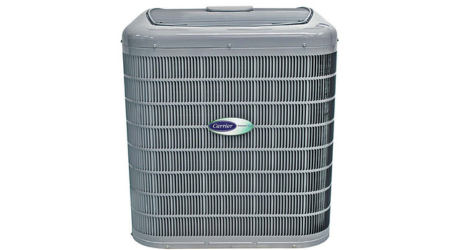
A condenser that cannot breathe cannot dump heat, and that is the single most common cause of weak cooling we see early in the season. The outdoor unit works by moving heat from inside your house into the outside air, and it needs airflow across its fins to do it.
Keep at least two feet of clearance on every side. Pull out the leaves, twigs and grass clippings that built up over winter and spring, and cut back any shrub or branch that crept in over the year. Rinse the exterior fins with a gentle hose stream if they look dirty.
Never use a pressure washer. The fins are thin aluminium and they bend flat under pressure, which blocks the airflow you were trying to restore. Bent fins are a repair, not a cleaning.

2. Fit a fresh filter
A clogged filter is the cheapest problem on this page and the one that costs the most over a summer. It starves the indoor coil of airflow, which makes the system run longer for the same cooling and, in the worst case, lets the coil freeze into a block of ice that stops cooling entirely.
Check it monthly through the cooling season and change it when it looks grey rather than on a fixed date, because how fast it loads depends on pets, renovations and how much the system runs. Write the date on the cardboard edge with a marker when you fit it. If the coil has already frozen, that is a different problem and why is my AC not cooling covers it.
3. Open and clear every vent
Closing vents in unused rooms does not save money on a central system, it raises static pressure in the ductwork and makes the blower work against itself. Open every supply register, including the ones in rooms nobody uses, and make sure the return vents are not behind a couch or a curtain.
Walk the house once and look. Furniture moves over a winter, and a sofa parked over a floor register is a genuinely common cause of one room never cooling.
4. Test it on a mild day
Run the system for fifteen or twenty minutes on a day when you do not need it, and pay attention to three things: does cold air actually arrive at the registers, does the outdoor unit run steadily rather than starting and stopping, and does anything sound different from last year.
Grinding, screeching or a hard electrical hum are all reasons to stop and call rather than keep running it. So is an outdoor unit that starts, runs a few seconds and cuts out repeatedly. That pattern is usually electrical and it can damage the compressor, which is the most expensive part in the system.
Safety: where the homeowner checklist stops
Everything above is outside the cabinet. Do not open the electrical panel on the outdoor unit, do not replace a capacitor or contactor yourself, and do not top up refrigerant. The disconnect near the condenser carries line voltage even when the thermostat is off, and capacitors hold a charge after the power is cut.
Refrigerant work is regulated in Ontario, and the regulation is specific. Under O. Reg. 463/10, Ozone Depleting Substances and Other Halocarbons, section 22 states that no person shall service or test refrigeration equipment containing a refrigerant unless that person is certified under section 34, and section 19 prohibits discharging refrigerant into the natural environment or within a building. In practice the section 34 certificate is the ODP card. So "topping up" a system that is low means finding the leak, not adding gas.
If the outdoor unit is tripping a breaker, reset it once. If it trips again, leave it off and call. A breaker that keeps tripping is doing its job.
5. Book the tune-up, and what it covers
A professional tune-up finds the faults the four free tasks cannot: the electrical parts that are degrading but have not failed, the refrigerant charge that has drifted, and the drain that is about to back up. Here is what a technician actually checks and why each item is on the list. If your furnace is due at the same time, our spring HVAC inspection guide covers the whole-system visit, heating side included.
| What is checked | What it catches | If it is missed |
|---|---|---|
| Capacitor and contactor | A weak start component | No-start on the first hot day |
| Refrigerant charge and pressures | A slow leak | Weak cooling, then compressor strain |
| Indoor coil and condensate drain | A drain starting to block | Water where you do not want it |
| Blower and airflow | Restricted return, dirty wheel | Long runtimes, uneven rooms |
| Electrical connections and amp draw | Loose or pitted connections | Nuisance trips, heat damage |
| Thermostat calibration and cycle | Short cycling | Wear on the compressor |
Table 3. The items a precision tune-up covers on a residential split system, compiled from how our technicians run a summer service call, as of August 2026. The service invoice listing these is also the maintenance record your warranty exclusions ask for.
What skipping the tune-up actually costs
Skipping a yearly tune-up rarely breaks the air conditioner on the day you skip it. It costs you in three slower ways, and all three are cheaper to prevent than to fix.
| What goes wrong | Found in May | Found in July |
|---|---|---|
| Weak capacitor | Scheduled visit, small part | No cooling, emergency call |
| Slow refrigerant leak | Leak found and repaired | Compressor running strained |
| Blocked condensate drain | Cleared in minutes | Water damage to deal with first |
| Dirty coil, no service record | Cleaned, invoice on file | A neglect argument on a warranty claim |
Table 4. The same four faults, framed by when they are found rather than by what they are, as of August 2026. No dollar figures appear because the cost depends on the fault and on the system. What the table shows is scheduled work against emergency work.
You pay for the same cooling twice. A clogged filter, a dirty condenser coil and a low refrigerant charge all make the system run longer to reach the same indoor temperature. The thermostat still gets there, so nothing looks wrong. The difference shows up on the summer hydro bill rather than on the wall.
Cheap parts become emergency calls. A weak capacitor, a pitted contactor or a slow refrigerant leak are small fixes when a technician finds them in May. The same three faults in the middle of a July heat wave are an after-hours visit on the worst week of the year, when every contractor in Peel Region is booked.
It can cost you the warranty. Manufacturers commonly exclude failures they can trace to neglect, and protection plans typically require proof of annual service. The service invoice is the proof, which is why keeping it matters as much as booking the visit. Our guide to the air conditioner warranty in Ontario covers what is excluded and why, and HVAC labour warranty in Ontario explains who pays the technician once the parts term is running but the labour term has expired.
One thing we will not tell you is that a skipped tune-up takes a decade off the unit. That figure is repeated on a lot of HVAC pages and there is no primary source behind it. What we can say from the vans is narrower and more useful: the failures we attend in July are overwhelmingly the ones a spring visit would have caught.
Plan or pay per visit?
A maintenance plan makes sense when you were going to book the annual service anyway, because the plan bundles it with repair cover and removes the diagnostic fee. It makes less sense on a system still inside both its parts warranty and its labour warranty, when the only thing you are really buying is the visit.
| Cooling plan | Monthly | Repair cover per year | Includes |
|---|---|---|---|
| Bronze | $10.99 CAD | None, maintenance only | 21-point annual inspection |
| Silver | $19.99 CAD | Parts and labour up to $750 CAD | The inspection, plus repair cover |
| Gold | $28.99 CAD | Parts and labour up to $1,000 CAD, no deductible | The above, plus 25 per cent off filters or free delivery |
| Gold, heating and cooling | $46.99 CAD | Parts and labour up to $1,500 CAD, no deductible | Covers the furnace and the air conditioner |
Table 5. Source: aireonepeel.ca/protection-plans/, read August 27, 2026. Prices carry an asterisk on that page; confirm current terms before signing.
The honest downside. A plan is a monthly payment for a repair that may never happen, and Silver caps repair cover at $750 CAD a year, which a major component plus several hours of labour can exceed. On a new, well-installed system the case for a plan is weakest in exactly the first year or two when people are most often sold one. Where it earns its keep is the middle years, and the annual inspection is doing double duty there because it is also the maintenance record your warranty exclusions ask for. The tiers are on our protection plans page.
Is your AC ready, or does it need a pro?
Three questions. Every answer this gives already appears in the tables and prose above.
Question 1 of 3
When you ran it, what happened?
Question 2 of 3
When was it last professionally serviced?
Question 3 of 3
Have you done the four free tasks this spring?
Stop running it and call
An odd noise or a breaker that trips more than once is not something to work around. Grinding and screeching are mechanical, a hard hum with no start is usually electrical, and a repeated trip is the breaker doing its job. Leave it off. Running it anyway is how a small electrical fault becomes a compressor replacement.
Weak cooling is a diagnosis, not a checklist item
Do the four free tasks first, because a clogged filter or a choked condenser explains a lot of weak cooling and costs nothing to rule out. If it is still weak afterwards, the likely causes are a refrigerant charge that has drifted or a coil that needs cleaning, and both need a technician. Start with why is my AC not cooling.
Test it before you book anything
Run it for fifteen minutes on the next mild day. That single test tells you which of the other answers on this page applies to you, and it is worth doing before you spend money. If it runs clean and it has been serviced in the last year, you may not need anything else this season.
Book the tune-up
It runs fine, which is good, but twelve months without a professional service is the gap where the invisible faults live: the capacitor that is weakening, the charge that has drifted, the drain that is narrowing. None of those show up in a test run. Booking it in May rather than July is the whole point.
You do not need us, you need an afternoon
It runs clean and it was serviced inside twelve months, so the professional side is covered. What is left are the four free tasks in Table 2: clear two feet around the condenser, fit a fresh filter, open every supply register, and keep the return vents clear. None of them costs anything, and a choked condenser or a loaded filter is the most common reason a healthy system still cools poorly in July.
You are in good shape, and we will say so
Serviced inside twelve months, running clean, and the four free tasks done. There is nothing you need to buy this season. Keep changing the filter monthly through the summer, keep the invoice from the last service where you can find it, and check the clearance around the outdoor unit again after the first heat wave.
How we know this
The maintenance steps and the tune-up checklist come from how our technicians actually run a summer service call in Peel Region. The regulatory statement was read from Ontario's own published regulation on August 27, 2026, and the plan figures from our protection plans page the same day. The seasonal pattern described here, that July failures are largely May-preventable faults, is our own observation from running this business through Ontario summers.
No percentage appears anywhere on this page, and that is deliberate. We do not publish a figure for how much a tune-up saves or how many years it adds, because we do not have a sample we could defend. Two other things we do not claim: any review count or star rating, because those are not confirmed on the platforms that host them, and any figure for how long this company has been trading, because the site currently gives four different answers and one of them has to be wrong.
From our workshop and our vans
1 of 3
Book your AC tune-up before the first heat wave
We are a Carrier Factory Authorized Dealer and a TSSA-registered fuels contractor, FS R0076624709, serving Mississauga, Brampton, Caledon, Bolton, Georgetown, Milton and Etobicoke. In-home estimates are free, and emergency service runs 24/7 with no after-hours charge.
1625 Courtneypark Dr E, Mississauga, ON L5T 1V9 · Air conditioner service in Mississauga
Frequently asked questions
When should I get my AC ready for summer in Ontario?
Late April through May, before the first humid stretch. Doing it early is not about the calendar, it is about finding faults while a repair is still a scheduled appointment rather than an emergency call during a heat wave when contractors are fully booked.
How often should I service my air conditioner?
Once a year, professionally, plus a monthly filter check through the cooling season. Annual service is also what manufacturer warranties and protection plans generally expect, and the invoice is the proof you would produce if a claim were ever questioned.
Can I clean the outdoor unit myself?
Yes, from the outside. Clear two feet of space on every side, remove leaves and clippings, and rinse the fins with a gentle hose stream. Never use a pressure washer, because it bends the aluminium fins flat and blocks the airflow you were trying to restore.
Should I close vents in rooms I do not use?
No. On a central system, closing registers raises static pressure in the ductwork and makes the blower work against itself. That costs airflow everywhere else and can push the indoor coil toward freezing. Open every supply register, and keep furniture and curtains clear of the return vents.
Why is my air conditioner not cooling even after I cleaned it?
The common causes left after a cleaning are a refrigerant charge that has drifted, a dirty indoor coil, or an electrical part that is failing. All three need a technician, and refrigerant work in particular is regulated in Ontario and cannot legally be done by a homeowner.
Can I top up the refrigerant myself?
No. Under O. Reg. 463/10, section 22, no person may service or test refrigeration equipment containing a refrigerant unless certified under section 34, and section 19 prohibits discharging refrigerant into the natural environment or within a building. A system that is low is leaking, so the real fix is finding the leak rather than adding gas.
Is a maintenance plan worth it for an air conditioner?
It is worth most in the middle years, once the contractor labour warranty has expired but the manufacturer parts warranty is still running. On a new system inside both warranties you are mainly paying for the annual visit, so compare the plan against simply booking that visit.
Final verdict
Four free tasks and one paid visit, done in May, is the whole of it. Clear the outdoor unit, fit a filter, open the vents, run a test, and book the tune-up if it has been a year. That sequence catches most of what puts air conditioners out of service in July.
Be clear about which half does what. The free tasks protect airflow, which is the most common cause of weak cooling and the easiest to fix. The paid visit finds the electrical and refrigerant faults you cannot see and would not know to look for. Doing only the first half and calling the system maintained is the mistake we see most often.
And keep the invoice. It is the least interesting thing on this page and it is the one that decides warranty arguments years later.
What we updated
September 2, 2026. Added the outdoor unit clearance diagram to step one. Re-checked every protection plan price on this page against our own plans page, and all six still match. Retired two older pages that were competing with this one for the same searches, and repointed the internal links that pointed at them. No prices, coverage limits or safety guidance changed.
Sources and references
All sources below were read on August 27, 2026.
- O. Reg. 463/10, Ozone Depleting Substances and Other Halocarbons. The Ontario regulation governing refrigerant work. Section 22 sets the certification requirement for servicing or testing, section 34 defines the certificate, and section 19 prohibits discharge. Read August 27, 2026.
- Technical Standards and Safety Authority. Contractor registration and the public lookup tool.
- Natural Resources Canada, Energy Star Canada. Efficiency guidance for residential cooling equipment.
- Aire One Peel protection plans. Tier names, monthly prices, annual repair limits and the 21-point inspection.
Mario Vaghei
General Manager, Aire One Peel Heating & Cooling
This page absorbed two older articles that said the same thing in fewer words, so I rewrote it to earn the traffic all three were splitting. I also took out a star rating and a review count we cannot evidence on the platforms that host them, and a claim about how long we have been trading that contradicts three other places on our own site. If we cannot show you where a number comes from, it should not be on the page.


