




Updated September 18, 2026 · Aire One Peel Heating & Cooling, Mississauga
The 9 checks at a glance
| Check | What it does | Who does it | How often |
|---|---|---|---|
| 1. Replace or clean the filter | Restores airflow. A clogged filter makes the furnace run longer and can overheat it. | You | Check monthly. Replace 1-inch filters every 1 to 3 months and 4 to 5 inch media filters every 6 to 12 months. |
| 2. Open and clear every supply and return register | Keeps duct pressure where the furnace was designed to run. | You | Each fall, and after moving furniture. |
| 3. Set the thermostat back | Natural Resources Canada: 1 °C lower for eight hours saves about 2 per cent of heating energy. | You | Program it once. |
| 4. Seal the duct joints you can reach | Stops heated air leaking into the basement ceiling or a crawl space. | You or a technician | Once. |
| 5. Stop drafts and top up attic insulation | Lowers the amount of heat the furnace has to make. | You or a contractor | Once. |
| 6. Keep winter humidity near 30 per cent | Air at the right humidity feels warmer at the same temperature. | You | Through the heating season. |
| 7. Keep the furnace area and the outdoor vent pipes clear | Combustion air and exhaust need a clear path. A snow-blocked pipe shuts a high-efficiency furnace down. | You | After every heavy snowfall. |
| 8. Book a yearly tune-up | Clean burners and flame sensor, correct gas pressure and temperature rise. | Licensed gas technician | Every fall. |
| 9. Know the limit of an old furnace | The AFUE rating sets the ceiling. Maintenance cannot turn an 80 per cent furnace into a 96 per cent one. | You, with a quote | When repair bills start to climb. |
Airflow first: the filter and the registers
Most efficiency problems we see in Peel Region homes are airflow problems. A furnace heats air that the blower pushes across the heat exchanger; when a clogged filter or blocked registers choke that air, the furnace runs hotter and longer for the same result, and its safety limit can shut the burner off mid-cycle. Hold the filter up to a light once a month. If you cannot see light through it, replace it.
Walk the house each fall and make sure every supply and return register is open and not covered by a rug, a couch or a bed. Closing registers in unused rooms does not save energy. It raises the pressure in the ducts, pushes more air out through leaky joints and makes the blower work harder.
The thermostat: small setbacks, real savings
Natural Resources Canada estimates that lowering the thermostat by 1 °C for eight hours saves about 2 per cent of heating energy, and recommends not setting it below 17 °C because of the risk of moisture building up in exterior walls. A setback of 2 to 3 °C overnight and while the house is empty is a sensible target for a gas furnace. Turning the thermostat up higher than you want does not heat the house faster; the furnace only runs longer. If a heat pump does part of your heating, keep setbacks small, because a large recovery can bring on the more expensive backup heat.
Keep the heat you paid for: ducts, drafts and insulation
In many homes part of the heated air never reaches the rooms. Look at the duct joints you can reach in the basement and seal the gaps with foil tape or duct mastic, not cloth duct tape, which dries out and falls off. Then deal with the house itself: weatherstrip the doors, seal around the basement rim joist and check the attic insulation. Our guides to how insulation affects HVAC efficiency and to lowering a heating bill in Ontario cover where the money goes first.
Humidity and comfort
Dry winter air feels cooler, which tempts everyone to nudge the thermostat up. Health Canada names 30 per cent as the winter figure for indoor humidity, and your windows tell you when you have gone too far: condensation on the glass means it is too high for the outdoor temperature. See our guide to indoor humidity in winter for the numbers.
Clear space, clear vents
Keep storage, paint and laundry away from the furnace so it can draw air and so a technician can reach it. A high-efficiency furnace breathes through plastic pipes that exit the side of the house. Snow, ice or leaves over those pipes will shut the furnace down, so check them after every heavy snowfall. While you are at it, test your carbon monoxide alarms; our furnace ready for winter checklist covers the current alarm rules, and furnace carbon monoxide in Ontario explains the warning signs.
What a yearly tune-up does for efficiency
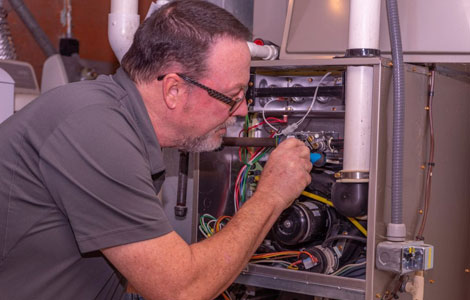
A tune-up is the one item on this list that is not a do-it-yourself job, because it involves the gas train and combustion. The technician cleans the burners and the flame sensor, checks the gas pressure and the temperature rise across the heat exchanger, tests the safety controls, clears the condensate drain and confirms the venting. A furnace set up to its rated figures burns less gas for the same heat, and small faults are caught before they become a no-heat call in January. See how often a furnace should be serviced; our protection plans include an annual preventative maintenance and tune-up.
When the furnace itself is the limit
Every furnace has an AFUE rating: the share of the gas it burns that becomes heat in the house. Mid-efficiency furnaces are rated around 80 per cent. Gas furnaces manufactured for sale in Canada since July 3, 2019 must reach at least 95 per cent, and the best models go higher. Maintenance keeps a furnace close to its rating; it cannot raise the rating. If yours is an older mid-efficiency unit that also needs regular repairs, read how long a furnace lasts in Ontario, compare the models in our furnace brand guide and ask for a quote on furnace installation in Mississauga. If you are weighing a heat pump instead, see heat pump versus furnace running costs.
What does not improve furnace efficiency
- Closing registers or doors to unused rooms.
- Setting the thermostat higher to heat the house faster.
- Stretching a filter past its life to save the cost of a new one.
- Running several electric space heaters to avoid using the furnace.
Frequently asked questions
How can I make my furnace more efficient?
Start with airflow: replace the filter on schedule and keep every supply and return register open and clear. Then set the thermostat back a few degrees overnight, seal the duct joints you can reach, keep the outdoor vent pipes clear and book a yearly tune-up. If the furnace is an older mid-efficiency model rated around 80 per cent AFUE, replacement is the only step that changes the rating itself.
Does closing vents in unused rooms save money?
No. A furnace and its ducts are sized to move a set amount of air. Closing registers raises the pressure in the ducts, increases leakage at the joints, makes the blower work harder and can overheat the heat exchanger. Keep all registers open and lower the thermostat instead.
How often should I change my furnace filter in winter?
Check it monthly during the heating season. Most 1-inch filters need replacing every 1 to 3 months, sooner with pets, renovations or a lot of dust. Thicker 4 to 5 inch media filters usually last 6 to 12 months.
Is it cheaper to leave the heat on all day or to turn it down?
Turning it down saves energy. Natural Resources Canada estimates that lowering the thermostat by 1 °C for eight hours saves about 2 per cent of heating energy, and advises not going below 17 °C because of the risk of moisture in exterior walls. Homes heated by a heat pump should use smaller setbacks.
When is a furnace too old to be efficient?
The rating matters more than the age. Mid-efficiency furnaces are rated around 80 per cent AFUE, while gas furnaces manufactured for sale in Canada since July 3, 2019 must reach at least 95 per cent. If an older furnace also needs frequent repairs, compare the cost of a replacement before paying for another major repair.
Want the furnace checked before the cold arrives? Call Aire One Peel at 905-564-8545, see our furnace repair Mississauga page or book a visit online.